
The Impact of AR/VR on Patient Education and Healthcare CRM
The healthcare industry is undergoing a digital transformation, and technologies like Augmented Reality (AR) and Virtual Reality (VR) are leading


The healthcare industry is undergoing a digital transformation, and technologies like Augmented Reality (AR) and Virtual Reality (VR) are leading this change. While AR and VR are often associated with gaming or entertainment, their impact on patient education and healthcare CRM (Customer Relationship Management) systems is both innovative and transformative. These immersive technologies help clinics and hospitals engage patients, improve understanding, and deliver personalized experiences, all while enhancing how healthcare providers manage relationships through CRM systems.
This blog explores how AR and VR are reshaping patient education and how their integration with healthcare CRM systems creates a more interactive, data-driven, and patient-centered healthcare environment.
Understanding AR/VR in Healthcare
Before diving into their applications, it’s important to understand how AR and VR differ:
- Augmented Reality (AR) overlays digital elements — such as 3D visuals or data — onto the real world through devices like smartphones or smart glasses.
- Virtual Reality (VR) creates a fully immersive digital environment where users can interact with 3D simulations using headsets.
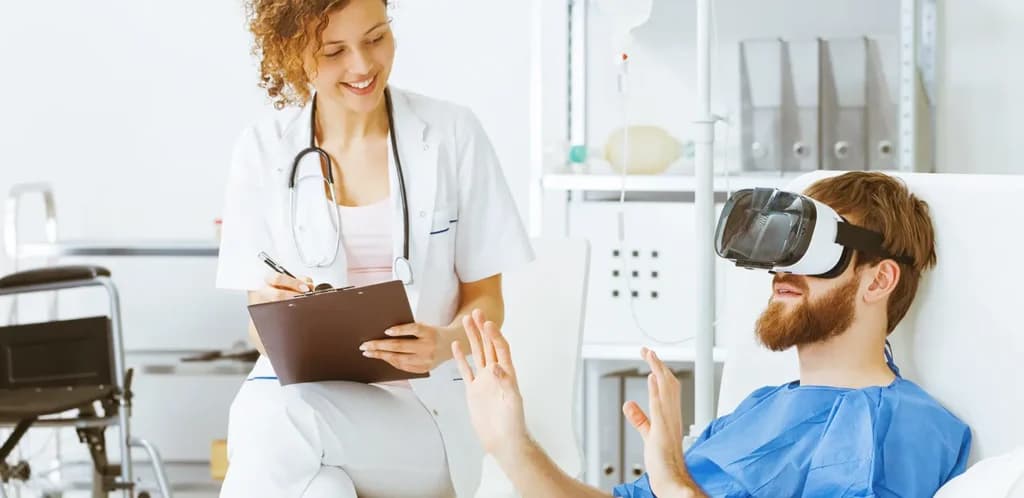
In healthcare, both technologies serve as powerful educational tools that bridge the gap between complex medical information and patient comprehension. When connected with a Healthcare CRM system, these technologies enable clinics to track, personalize, and optimize the learning and care experience for every patient.
1. Transforming Patient Education with AR/VR
Traditional patient education often relies on brochures, verbal explanations, or static visuals — all of which can be difficult for patients to fully understand. AR and VR, however, make medical education interactive and engaging.
For instance:
- Patients can use VR simulations to visualize surgical procedures, learning what happens step-by-step before going into the operation room.
- AR applications can display 3D models of body parts on a tablet, allowing patients to see how conditions develop or how treatments work.
- In physiotherapy, AR can guide patients through correct movement exercises, reducing the risk of injury or improper technique.
By integrating these AR/VR educational sessions into the healthcare CRM, providers can monitor engagement metrics — such as how long a patient interacted with a module or which topics they reviewed most frequently. This data helps doctors and educators tailor follow-up communication and treatment recommendations to individual patient needs.
2. Personalizing Healthcare Through CRM Integration
When AR/VR is connected to a CRM platform, patient experiences become more personalized and data-driven. Each interaction — whether a virtual anatomy tutorial or a VR-based therapy session — generates valuable behavioral data.
This data is automatically stored in the CRM, building a detailed profile that includes:
- Patient engagement patterns (what type of content they prefer)
- Emotional responses or comfort levels during sessions
- Areas of confusion or repeated learning
Using these insights, the CRM can help providers create personalized learning paths, recommend specific educational modules, and even send reminders for upcoming VR sessions or follow-up appointments.
For example, if a diabetic patient engages more with VR nutrition tutorials, the CRM can automatically recommend a diet management program or connect them with a nutritionist — all based on real-time data collected during the VR sessions.
3. Enhancing Pre- and Post-Treatment Communication
Clear communication is essential to reducing patient anxiety and ensuring adherence to treatment plans. AR and VR can simplify complex medical information, allowing patients to understand diagnoses and procedures visually rather than through medical jargon.
Imagine a patient preparing for knee replacement surgery. Through a VR experience, they can explore a virtual 3D model of the procedure, understand recovery steps, and even practice postoperative exercises in an immersive environment.
After the procedure, AR apps can provide real-time guidance on wound care or rehabilitation exercises at home. Meanwhile, the CRM system records these interactions, allowing healthcare providers to track patient engagement and send follow-up tips, progress assessments, or reminders — all personalized to each patient’s recovery stage.
This two-way flow of education and feedback enhances both the patient experience and clinical efficiency.
4. Empowering Patients Through Engagement and Confidence
Many patients feel overwhelmed when dealing with medical information. AR and VR help overcome this by making learning visual, experiential, and interactive. Patients who can see and experience what’s happening inside their bodies are more confident in their treatment decisions and more likely to follow care plans accurately.
This improved engagement also strengthens trust between patients and healthcare providers. As CRM systems track these engagement levels, clinics can identify patients who need additional education or reassurance and proactively reach out to them.
The combination of AR/VR education and CRM analytics ensures that every patient receives timely, empathetic, and personalized support, leading to higher satisfaction rates and better health outcomes
5. Improving Healthcare Staff Training and Communication
AR and VR don’t just benefit patients — they also improve how healthcare professionals interact with and educate patients. Through VR-based simulations, staff can practice communication techniques, empathy exercises, and procedural explanations in virtual environments.
The CRM then tracks staff training progress and performance metrics, ensuring consistent, high-quality patient interactions across all departments. For example, if data in the CRM shows that patients respond better to visual explanations, staff can be guided to incorporate AR-based visuals during consultations.
This integration strengthens the entire ecosystem — aligning patient education, staff performance, and organizational goals.
6. Data-Driven Insights for Continuous Improvement
Every AR/VR session generates detailed interaction data — how patients respond, where they struggle, and what captures their attention most. When analyzed through CRM analytics, this data provides actionable insights that can improve care delivery.
For instance:
- Clinics can identify which educational modules are most effective.
- Providers can determine which patients need more engagement or counseling.
- Healthcare marketers can design targeted wellness campaigns based on patient behavior trends.
This data-driven approach helps clinics evolve their education strategies and continuously enhance the patient experience.
7. Building Trust and Long-Term Relationships
Ultimately, the integration of AR/VR with healthcare CRM systems builds trust and long-term relationships. When patients receive personalized, immersive education and consistent follow-up support, they feel valued and informed.
A well-managed CRM ensures that no patient is forgotten — every question is answered, every concern is addressed, and every interaction is recorded. Combined with the immersive nature of AR and VR, this creates a healthcare experience that is both human and high-tech.
Patients who feel empowered through education are more likely to stay loyal, refer others, and actively participate in preventive care — benefiting both the healthcare provider and the community at large.
Conclusion
The convergence of Augmented Reality, Virtual Reality, and Healthcare CRM systems marks a major step forward in patient education and engagement. AR/VR transforms how medical knowledge is delivered — making it visual, experiential, and easy to understand — while CRM ensures that every interaction is tracked, personalized, and optimized for continuous improvement.
Together, they create a seamless bridge between technology and empathy, helping clinics deliver not only better treatments but also better experiences. As healthcare continues to evolve, AR/VR and CRM integration will be central to building smarter, more compassionate, and patient-focused systems that redefine the future of care.
The Doctorna editorial desk writes about healthcare operations, patient experience and the systems clinics use to connect them.