
Hospitals manage complex operations every day, from patient registration and appointment scheduling to medical records, billing, staff coordination, and communication. Managing these processes manually or across disconnected systems can create delays, increase administrative workloads, and make it difficult to access important information.
Hospital Management Systems (HMS) provide a centralized digital solution for managing many hospital operations. By connecting departments, automating repetitive tasks, and improving access to information, these systems can help hospitals operate more efficiently while supporting a better patient experience.
What Is a Hospital Management System?
A Hospital Management System is a software platform designed to manage and streamline administrative, clinical, and operational activities within a healthcare organization.
Depending on the system, an HMS may include modules for patient registration, appointments, electronic medical records, billing, pharmacy management, laboratory management, inventory, staff management, reporting, and communication.
By bringing multiple processes together, an HMS can reduce reliance on paper-based workflows and disconnected applications.
Streamlining Patient Registration
Patient registration is often one of the first interactions patients have with a hospital. Manual registration can result in long waiting times and repetitive data entry.
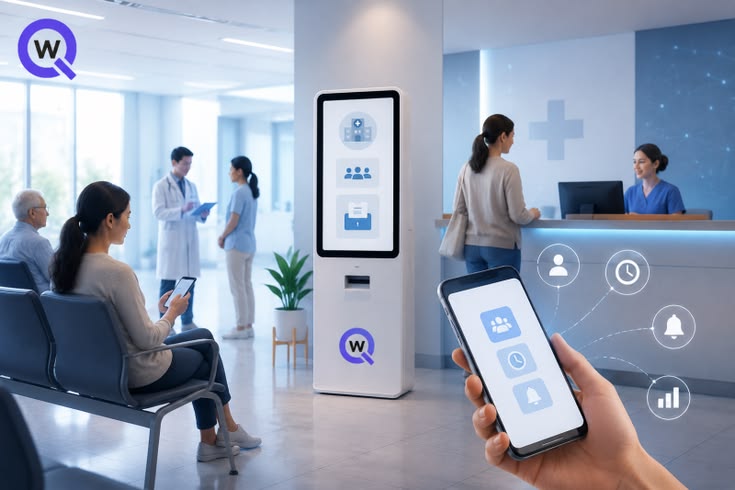
A digital Hospital Management System can simplify registration by allowing staff to capture and organize patient information electronically. Some systems can also support online registration and digital forms.
Faster registration can reduce queues and help hospital staff move patients through the admission process more efficiently.
Improving Appointment Scheduling
Hospitals often manage large numbers of appointments across multiple departments and healthcare professionals. Coordinating these schedules manually can be challenging.
An HMS can provide centralized appointment scheduling, helping staff view availability and manage appointments more effectively. Automated reminders can also help patients remember upcoming appointments.
Better scheduling can reduce administrative work and help healthcare professionals make more efficient use of their available time.
Centralizing Patient Records
Access to accurate patient information is essential for efficient healthcare delivery. Searching through paper files or multiple systems can consume valuable time.
Hospital Management Systems can centralize patient information and provide authorized users with access to relevant records. Depending on the system, information may include medical history, appointment details, reports, prescriptions, and treatment information.
Centralized records can improve information accessibility and reduce unnecessary duplication.
Automating Billing and Financial Processes
Hospital billing can involve multiple services, departments, insurance processes, and payment records. Manual billing can increase the risk of errors and delays.
An HMS can automate and organize many financial workflows. It can help track services, generate invoices, manage payment information, and support insurance-related processes depending on the system’s capabilities.
Automation can reduce administrative workload while improving the consistency of financial records.
Better Coordination Between Departments
Hospitals consist of multiple departments that need to exchange information regularly. Poor communication between departments can create delays and operational problems.
A centralized hospital management platform can connect relevant workflows and improve information sharing between authorized departments.
Better coordination can help staff access the information they need and reduce unnecessary communication gaps.
Managing Pharmacy and Inventory
Inventory management is another important part of hospital operations. Hospitals need to monitor medicines, medical supplies, equipment, and other resources.
An HMS with inventory or pharmacy management capabilities can help track stock levels, usage, purchases, and availability.
Automated alerts can notify authorized staff when inventory reaches predefined levels, helping reduce the risk of shortages and unnecessary overstocking.
Improving Laboratory Management
Laboratory workflows often involve test requests, sample tracking, results, and communication with healthcare professionals.
A Hospital Management System can connect laboratory processes with other hospital workflows. This can make it easier to track requests and organize results.
Digital laboratory management can reduce manual data entry and improve the flow of information between departments.
Supporting Staff Management
Hospitals need to coordinate doctors, nurses, administrative teams, technicians, and other staff members. Managing schedules and responsibilities manually can be complicated.
Hospital management software can support staff scheduling, attendance tracking, department assignments, and other administrative processes.
This can help hospital administrators manage resources more effectively and reduce scheduling conflicts.
Data and Reporting
Hospitals generate large amounts of operational and patient-related information. Without appropriate reporting tools, it can be difficult to turn this information into useful insights.
An HMS can provide reports and dashboards covering areas such as appointments, admissions, billing, inventory, patient volumes, and operational performance.
These insights can help administrators identify inefficiencies, monitor performance, and make more informed decisions.
Enhancing Patient Communication
Communication is an important part of hospital efficiency. Patients may need information about appointments, procedures, reports, payments, and follow-ups.
Automated notifications through available digital channels can help keep patients informed. This can reduce the need for staff to make repetitive calls and help patients receive important information on time.
Improving Data Security
Hospitals handle sensitive patient and operational information, making security a critical consideration. A properly implemented HMS can include security features such as user authentication, role-based access, audit logs, backups, and data protection measures.
Healthcare organizations should also ensure that their systems comply with applicable privacy and regulatory requirements.
Supporting Scalability
Hospitals can expand their services, departments, facilities, and patient populations over time. A scalable management system can support this growth by allowing organizations to add users, modules, integrations, or workflows when required.
This makes an HMS more than an administrative tool. It can become a long-term digital foundation for hospital operations.