
Artificial intelligence is becoming an important part of the healthcare technology landscape. From analyzing large datasets to supporting administrative workflows, AI can help healthcare organizations improve efficiency and deliver more personalized digital experiences. At the same time, AI in Healthcare: Benefits and Challenges must be considered carefully because healthcare involves sensitive information, complex decisions, and significant responsibilities.
AI should generally be viewed as a supportive technology rather than a replacement for healthcare professionals. When implemented responsibly, it can assist with certain tasks while allowing professionals to maintain oversight and make decisions based on clinical knowledge and individual patient circumstances.
Understanding AI in Healthcare
AI in healthcare involves technologies that can process information, identify patterns, generate insights, and automate selected tasks. Machine learning, natural language processing, computer vision, and predictive analytics are examples of technologies that can be incorporated into healthcare systems.
These capabilities can be integrated into electronic health records, healthcare management platforms, patient communication systems, medical imaging workflows, and other digital tools.
The specific benefits depend on the use case, data quality, implementation approach, and level of human oversight.
Improved Healthcare Data Analysis
Healthcare organizations generate substantial amounts of information through patient records, laboratory results, medical images, monitoring systems, and administrative processes.
AI can help process large datasets and identify patterns that might otherwise take considerable time to review manually. This can support healthcare professionals and administrators in organizing information and identifying areas that may require further attention.
AI-generated insights should still be reviewed appropriately, especially when they could influence patient-related decisions.
Support for Medical Imaging
Computer vision and machine learning technologies can assist with the analysis of certain medical images. AI systems may identify patterns or features that can help qualified professionals with image review.
Such tools can potentially support efficiency and consistency in appropriate workflows. However, AI outputs should not automatically be considered a final diagnosis. Professional interpretation and clinical context remain essential.
Administrative Automation
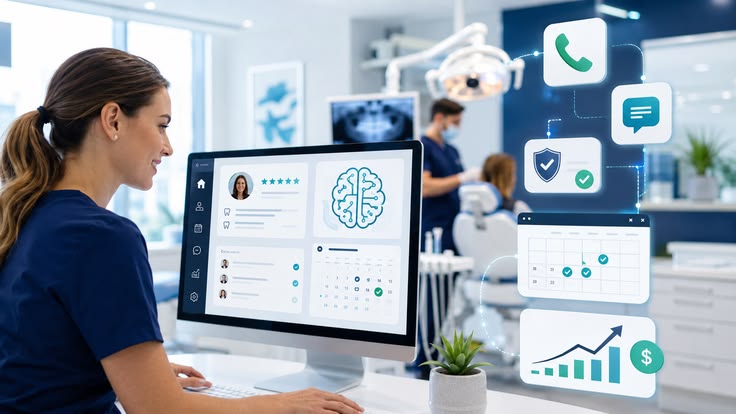
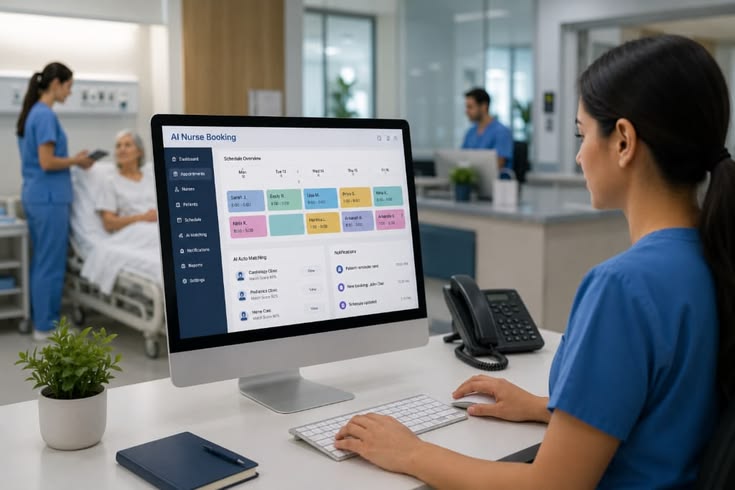
Healthcare involves many repetitive administrative tasks. Appointment reminders, scheduling, documentation support, data entry, billing workflows, and routine communication can require significant staff time.
AI-powered automation can assist with selected repetitive activities. Reducing manual workloads may allow staff to dedicate more time to patient-facing responsibilities and other tasks requiring professional judgment.
Personalized Patient Experiences
AI can help healthcare platforms analyze relevant information and provide more personalized digital experiences. Depending on the system, this may include tailored reminders, relevant educational resources, follow-up communication, or service recommendations.
Personalization should always respect privacy and appropriate data-use requirements. Healthcare organizations should be transparent about how patient information is collected and used.
Predictive Analytics
Predictive analytics is another potential application of AI in healthcare. AI models can analyze historical and current information to identify patterns associated with specific outcomes.
Healthcare organizations may use predictive tools for areas such as resource planning, patient monitoring, operational forecasting, and risk assessment.
Predictions should be treated as supportive information rather than absolute conclusions. Healthcare professionals need to consider the wider context before taking action.
Better Patient Communication
AI-powered conversational tools can help answer general questions, provide routine information, and support communication workflows. Automated systems can also assist with appointment reminders and other non-clinical interactions.
However, healthcare communication requires particular care. AI tools should have appropriate limitations and escalation processes when a situation requires human assistance or professional evaluation.
Challenges of AI in Healthcare
Data Privacy and Security
Patient information is highly sensitive, making privacy one of the most important challenges associated with healthcare AI.
Organizations must implement appropriate safeguards for data collection, storage, processing, and access. Authentication, authorization, encryption, monitoring, and strong governance practices can help protect sensitive information.
AI systems should be evaluated carefully to ensure that data is handled according to applicable privacy and regulatory requirements.
Accuracy and Reliability
AI systems are not infallible. They can produce inaccurate, incomplete, or inappropriate outputs, particularly when the underlying data is limited or does not represent the situation being evaluated.
Healthcare organizations should validate systems before deployment and continuously monitor their performance. Human review is particularly important when AI outputs could affect patient care.
Bias in AI Models
AI models can reflect biases present in the datasets used to develop them. If certain populations are underrepresented, a system may perform less effectively for those groups.
Healthcare organizations should evaluate AI systems across relevant populations and monitor performance over time. Diverse and representative data can help reduce certain forms of bias.
Ethical Considerations
AI introduces questions about accountability, transparency, consent, fairness, and responsibility. Organizations need to determine who is responsible when an AI-supported process produces an incorrect result.
Clear governance policies can establish how AI should be used, when human review is required, and how concerns should be identified and addressed.
Integration With Existing Systems
Many healthcare providers already use multiple software platforms. Integrating AI with existing electronic records, hospital management systems, communication platforms, and other technologies can be complex.
Poor integration can create duplicate work or disrupt established workflows. AI solutions should therefore be designed with interoperability and practical operational requirements in mind.
Lack of Transparency
Some advanced AI models can be difficult to interpret. Healthcare professionals may need to understand how an AI system arrived at a particular prediction or recommendation.
Explainability, documentation, validation, and appropriate oversight can help healthcare organizations use AI more responsibly.
Responsible Implementation of Healthcare AI
Successful AI adoption requires more than selecting advanced software. Healthcare organizations should first identify a clear problem that AI can realistically help address.
They should then evaluate data quality, security, integration requirements, user needs, regulatory considerations, and expected outcomes. Staff training is also important so that users understand both the capabilities and limitations of AI systems.
Continuous monitoring should remain part of the implementation process. AI systems may require updates as technology, data, workflows, and organizational requirements change.
The Future of AI in Healthcare
AI is likely to continue influencing healthcare technology as organizations explore new ways to improve efficiency and patient experiences. Advances in machine learning, automation, natural language processing, and data analytics may create additional opportunities.
However, future adoption will depend not only on technological capabilities but also on trust, responsible governance, privacy protection, security, and appropriate human involvement.
The strongest healthcare AI strategies will focus on practical value rather than adopting technology simply because it is available.
AI in Healthcare: Benefits and Challenges demonstrates the balance between technological opportunity and responsible implementation. AI can support healthcare data analysis, medical imaging workflows, administrative automation, personalized communication, and predictive analytics.
At the same time, privacy, cybersecurity, accuracy, bias, ethics, transparency, and system integration require careful attention. AI works most effectively when it complements human expertise rather than attempting to replace it.
By combining strong governance, secure technology, quality data, continuous evaluation, and human oversight, healthcare organizations can explore the benefits of AI while maintaining patient safety, trust, and responsible digital practices.