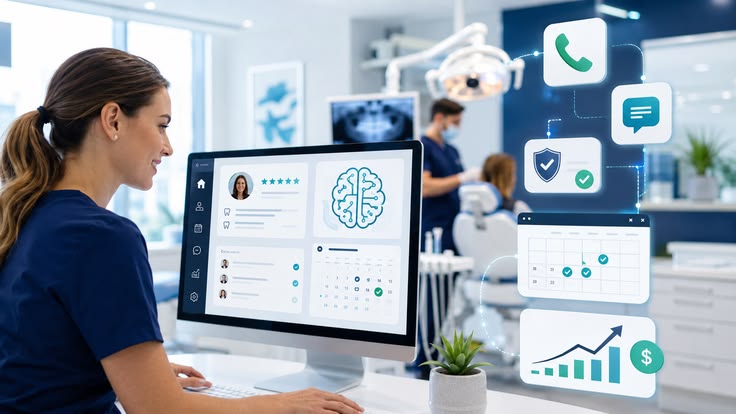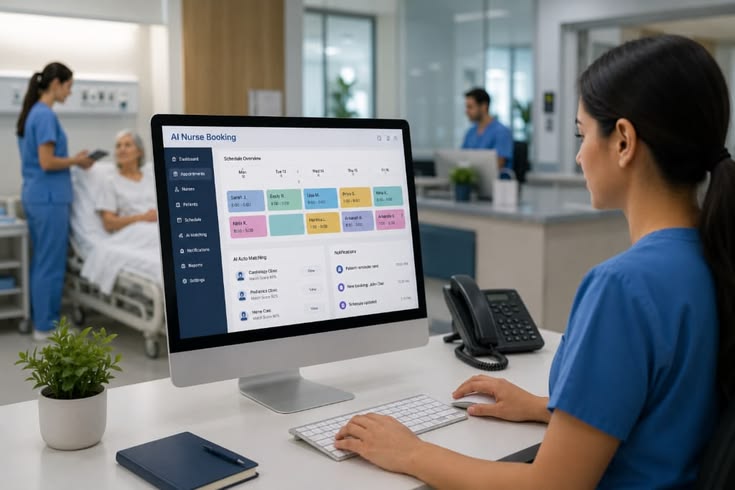


Artificial intelligence is becoming an important technology for modern healthcare organizations. Hospitals manage large amounts of information, coordinate multiple departments, communicate with patients, and handle complex administrative workflows every day. AI Applications in Hospital Management can help organizations streamline selected processes, improve operational efficiency, and support data-driven decision-making.
AI does not replace hospital administrators or healthcare professionals. Instead, it can provide tools that automate repetitive activities, identify patterns in data, and support staff with timely information. When implemented responsibly, AI can become part of a broader digital healthcare strategy.
AI for Hospital Administration
Hospital administration involves many repetitive processes, including appointment coordination, documentation, staff scheduling, patient registration, billing support, and resource management.
AI-powered systems can automate or assist with selected administrative activities. Automation can reduce manual workload and help staff manage routine processes more efficiently.
For example, intelligent scheduling systems can analyze available resources and appointments to support better scheduling decisions. This can help reduce administrative delays and improve coordination between departments.
Intelligent Appointment Management
Managing appointments can be challenging for hospitals with large patient volumes. AI can assist with scheduling, reminders, cancellations, and appointment prioritization.
Automated reminders can notify patients about upcoming appointments and provide relevant instructions. AI-powered systems can also identify scheduling patterns and help administrators manage appointment demand more effectively.
These capabilities can contribute to a smoother patient journey while reducing unnecessary administrative work.
AI-Powered Patient Communication
Communication is an important part of hospital management. Patients may need information about appointments, departments, services, procedures, or general hospital processes.
AI-powered conversational systems can provide responses to routine questions and guide users toward appropriate information. These tools can be available beyond standard office hours, providing additional convenience.
However, AI communication tools should have clear limitations and escalation options. Questions requiring professional medical judgment should be directed to qualified healthcare staff.
Predictive Analytics for Resource Planning
Hospitals need to plan resources such as beds, staff, equipment, and operating rooms. Predictive analytics can analyze historical and current information to identify operational patterns.
For example, data analysis may help administrators understand periods of higher demand and plan resources accordingly.
Predictive models are not guarantees of future events. They should be treated as decision-support tools and combined with professional judgment and real-world operational information.
Staff Scheduling and Workforce Management
Managing healthcare staff involves balancing availability, qualifications, shifts, workload, and departmental requirements.
AI-supported scheduling tools can analyze multiple variables and suggest suitable schedules. This can reduce the amount of manual planning required by administrators.
Automated scheduling should still allow managers to review recommendations and make adjustments when necessary.
Hospital Resource Optimization
Hospitals depend on expensive and limited resources, including medical equipment, rooms, beds, and specialized facilities. Efficient resource utilization can improve operational planning.
AI can analyze utilization patterns and identify opportunities to improve allocation. Administrators can use these insights to make more informed decisions about resource distribution and capacity planning.
Support for Inventory Management
Hospitals need reliable supplies of medicines, equipment, protective materials, and other resources. Stock shortages can disrupt operations, while excessive inventory can increase storage costs and waste.
AI-based inventory systems can analyze consumption patterns and help forecast future requirements. Automated alerts can notify staff when stock levels reach defined thresholds.
This can support more organized inventory management and reduce avoidable supply-related disruptions.
AI for Documentation and Data Management
Healthcare organizations generate substantial amounts of documentation. AI-powered tools can assist with organizing information, extracting relevant details, and automating selected documentation workflows.
Natural language processing can help process unstructured text and convert information into more usable formats.
Human review remains important because healthcare documentation can contain sensitive and clinically significant information.
Financial and Billing Support
Hospital management also involves financial administration. AI can assist with tasks such as identifying unusual billing patterns, organizing financial information, and supporting claims-related workflows.
Automated systems may help identify inconsistencies that require further review. This can improve administrative efficiency while allowing financial teams to focus on more complex cases.
AI for Patient Flow Management
Patient flow refers to how patients move through different stages of hospital services. Delays in registration, consultation, diagnostics, treatment, or discharge can affect both patient experience and hospital efficiency.
AI can analyze operational data to identify bottlenecks and patterns in patient movement. Administrators can use these insights to improve processes and coordinate resources more effectively.
Improving Hospital Decision-Making
One of the major advantages of AI is its ability to process large amounts of information. Hospital administrators can use AI-supported analytics to identify trends and compare operational performance.
Dashboards and reports can provide information about appointment volumes, resource utilization, patient flow, staffing requirements, and other operational metrics.
Better access to organized information can support faster and more informed management decisions.
Challenges of AI in Hospital Management
Despite its potential benefits, AI implementation comes with important challenges. Healthcare organizations must protect sensitive patient information and comply with applicable privacy and security requirements.
Data quality is another concern. AI systems depend on accurate and relevant information. Poor-quality or incomplete data can affect the usefulness of AI-generated insights.
Integration can also be difficult because hospitals often use multiple software systems. AI solutions need to work effectively with existing infrastructure without creating unnecessary complexity.
Staff training and change management are equally important. Employees need to understand how AI tools work, what their limitations are, and when human review is required.
Responsible AI Implementation
Hospitals should introduce AI based on clearly defined needs rather than adopting technology without a practical purpose. Before implementation, organizations should evaluate security, data quality, system compatibility, staff requirements, and expected outcomes.
Human oversight should remain part of important workflows. AI recommendations should be reviewed appropriately, especially when they involve sensitive patient information or decisions that could affect care.
Regular monitoring can also help organizations identify errors, performance issues, security concerns, or changing operational requirements.
Future of AI in Hospital Management
AI is likely to become increasingly integrated into hospital management platforms as healthcare organizations continue their digital transformation efforts. Improvements in automation, analytics, natural language processing, and intelligent decision-support systems may create new opportunities for operational efficiency.
The future of healthcare AI will depend on responsible implementation, strong cybersecurity, reliable data, interoperability, and continued human oversight.
AI Applications in Hospital Management can support hospitals across a wide range of administrative and operational activities. From appointment management and patient communication to resource planning, inventory management, staff scheduling, documentation, and patient flow, AI can help organizations manage information and processes more efficiently.
However, successful implementation requires careful planning. Privacy, security, data quality, system integration, transparency, and human oversight should remain central to every AI strategy. When used responsibly, AI can complement hospital staff and contribute to more efficient, organized, and digitally connected healthcare operations.