

In the age of digital healthcare, Customer Relationship Management (CRM) systems have become essential tools for healthcare organizations aiming to deliver personalized, efficient, and patient-centered care. Unlike traditional CRMs designed for sales or retail, healthcare CRMs focus on managing patient relationships, improving communication, optimizing workflows, and ensuring compliance with strict data regulations.
A modern healthcare CRM goes far beyond storing patient data—it integrates advanced technologies such as AI, automation, analytics, and cloud computing to enhance care delivery and operational efficiency. In this blog, we’ll explore the key features of a modern healthcare CRM and how they empower healthcare providers to improve both patient experience and organizational performance.
1. Centralized Patient Data Management
At the heart of any CRM lies data management, and in healthcare, this feature is especially critical. A modern healthcare CRM consolidates patient information from multiple sources—including Electronic Health Records (EHRs), appointment histories, communication logs, billing systems, and wearable devices—into a single, unified platform.
This 360-degree view of each patient ensures that healthcare professionals can easily access relevant data during consultations, follow-ups, or treatment planning. It minimizes duplication, reduces administrative errors, and improves overall coordination between departments.
Centralized data management also supports continuity of care, as every interaction, diagnosis, or feedback is securely recorded and accessible when needed.
2. Automated Appointment Scheduling and Reminders
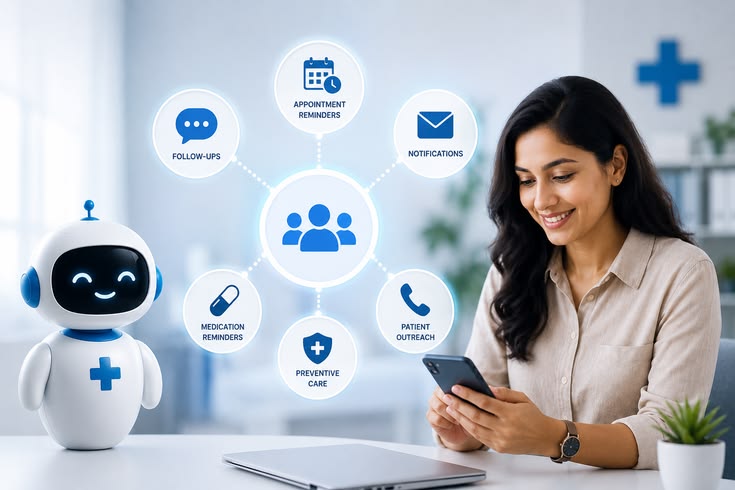
Missed appointments are a common challenge for healthcare providers, leading to wasted time and resources. A modern CRM includes automated scheduling and reminder systems that streamline this process.
Patients can book appointments online through integrated portals, and the CRM automatically confirms, reschedules, or sends reminders via SMS, email, or mobile notifications. This automation reduces no-shows and ensures that patients remain engaged throughout their care journey.
Moreover, the system can sync appointments with doctors’ calendars and resource availability, creating a seamless scheduling experience for both staff and patients.
3. AI-Powered Analytics and Predictive Insights
Modern healthcare CRMs are equipped with AI-driven analytics that transform raw patient data into actionable insights. Through machine learning and predictive modeling, the system can identify patterns in patient behavior, forecast demand for services, and detect potential health risks.
For example, predictive analytics can alert providers about patients who are likely to miss follow-ups or those at risk of developing chronic conditions. Healthcare administrators can also use these insights to allocate resources effectively and plan future campaigns or outreach initiatives.
By turning data into intelligence, AI-powered CRMs help healthcare organizations make proactive, data-driven decisions that improve both clinical and business outcomes.
4. Personalization and Patient Segmentation
No two patients are alike—and modern healthcare CRMs recognize this. With advanced segmentation tools, CRMs categorize patients based on demographics, medical conditions, preferences, and behavior patterns.
This segmentation enables healthcare marketers and administrators to deliver personalized communication and care plans. For instance, a CRM can automatically send preventive health reminders to elderly patients, post-surgery care tips to recovering patients, or wellness program invitations to younger audiences.
Personalized engagement not only increases patient satisfaction but also fosters loyalty and trust. Patients feel valued when they receive information and care tailored to their individual needs.
5. Seamless Integration with Other Healthcare Systems
A modern healthcare CRM is not an isolated tool—it acts as a central hub that connects with other digital healthcare platforms such as EHRs, telemedicine tools, billing software, and laboratory management systems.
Integration ensures that data flows smoothly across departments, eliminating manual entry and reducing errors. For example, when a patient books an appointment through the CRM, the information can automatically update the EHR, notify the assigned physician, and generate a billing record.
This interoperability improves efficiency, enhances accuracy, and provides healthcare teams with real-time access to complete patient information.
6. Workflow Automation and Efficiency
Automation is one of the defining features of modern healthcare CRMs. Routine administrative tasks—such as sending appointment reminders, collecting feedback, managing invoices, and updating patient records—can be automated to save time and minimize human error.
For example, after a patient’s visit, the CRM can automatically trigger follow-up messages, send satisfaction surveys, or remind them about medication schedules.
Automation also helps healthcare organizations manage multi-department workflows, ensuring that all teams—from front-desk staff to medical professionals—stay aligned and productive.
The result is a smoother, more efficient operation that allows healthcare providers to focus more on patient care and less on paperwork.
7. Multi-Channel Communication Tools
Effective communication is the foundation of strong patient relationships. Modern healthcare CRMs offer multi-channel communication capabilities, enabling providers to interact with patients through email, SMS, social media, and even AI chatbots.
Patients can receive instant notifications about appointments, prescriptions, lab results, or health tips, while providers can use the same system to respond quickly to inquiries or feedback.
This omnichannel communication ensures that patients stay informed and connected, improving engagement and satisfaction levels. Additionally, all communication is recorded within the CRM, providing a transparent record for future reference.
8. Compliance and Data Security
Healthcare data is highly sensitive, and maintaining security and compliance is non-negotiable. Modern CRMs are built with robust security measures such as end-to-end encryption, multi-factor authentication, and role-based access controls.
They also comply with global and regional data protection regulations, including HIPAA, GDPR, and local health data privacy laws.
Automated compliance monitoring ensures that every data interaction—whether storage, sharing, or access—is logged and secured. This not only safeguards patient trust but also protects healthcare organizations from legal risks and data breaches.
9. Patient Portals and Self-Service Features
Empowering patients with control over their healthcare journey is another key feature of modern CRMs. Patient portals integrated into CRMs allow individuals to view their medical records, book appointments, pay bills, and communicate directly with healthcare professionals.
These self-service features reduce administrative burden, minimize waiting times, and give patients a sense of involvement in their care. In today’s digital-first world, this transparency and convenience play a major role in building long-term trust and engagement.
10. Reporting and Performance Tracking
A modern healthcare CRM provides comprehensive reporting tools that help healthcare administrators track performance metrics, such as appointment completion rates, patient satisfaction levels, marketing ROI, and staff productivity.
These reports can be customized to display real-time dashboards, giving management teams a clear overview of key indicators. Data-driven performance tracking supports continuous improvement, enabling organizations to identify bottlenecks, optimize strategies, and measure the impact of operational decisions.

Final Thoughts
A modern healthcare CRM is much more than a patient database—it’s a strategic platform that integrates technology, analytics, and automation to revolutionize patient management and care delivery.
From centralized data management and AI-driven insights to personalized engagement and strict compliance measures, these systems empower healthcare providers to operate more efficiently and build stronger patient relationships.
As the healthcare industry continues to evolve, adopting a modern CRM isn’t just a competitive advantage—it’s a necessity. By embracing digital transformation through CRM technology, healthcare organizations can achieve their ultimate goal: delivering exceptional, patient-focused care in an increasingly connected world.