

The healthcare industry is undergoing a major digital transformation, and Customer Relationship Management (CRM) systems are playing a central role in this shift. Modern healthcare organizations are no longer focusing only on treatment—they are also prioritizing patient experience, communication, and long-term engagement. Understanding Healthcare CRM Trends Shaping the Healthcare Industry is essential for hospitals, clinics, and healthcare providers that want to stay competitive and deliver high-quality care.
Healthcare CRM is evolving rapidly with the integration of artificial intelligence, automation, data analytics, and patient-centric technologies. These advancements are helping healthcare providers improve efficiency, strengthen patient relationships, and optimize overall healthcare delivery.
The Evolution of Healthcare CRM
Traditional CRM systems were primarily used for managing basic patient records and communication. However, modern Healthcare CRM platforms have evolved into powerful digital ecosystems that support:
- Patient engagement
- Appointment management
- Marketing automation
- Clinical coordination
- Data analytics
- Personalized communication
This transformation is driven by increasing patient expectations and the need for more efficient healthcare operations.
Artificial Intelligence (AI) in Healthcare CRM
One of the most significant Healthcare CRM Trends Shaping the Healthcare Industry is the integration of artificial intelligence.
AI helps healthcare organizations by:
- Predicting patient behavior
- Personalizing communication
- Automating responses through chatbots
- Identifying high-risk patients
- Improving appointment scheduling efficiency
AI-powered CRM systems can analyze patient data and recommend personalized treatment reminders, follow-ups, and preventive care programs, improving both engagement and outcomes.
Automation of Administrative Tasks
Automation is revolutionizing healthcare operations by reducing manual workload.
Healthcare CRM systems now automate:
- Appointment scheduling
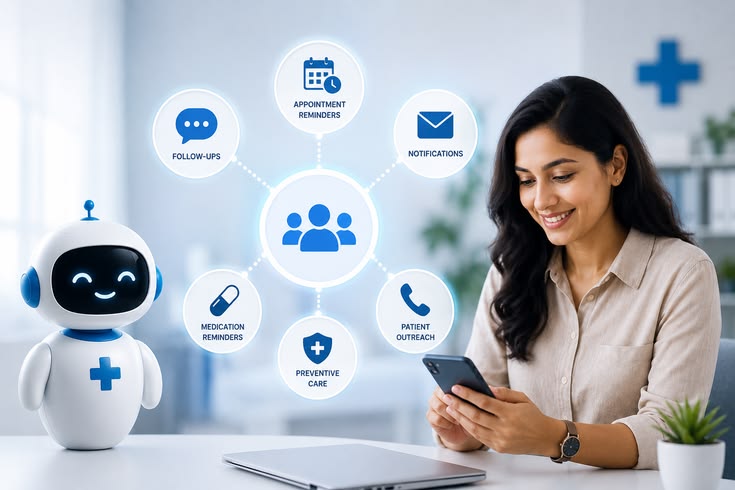
- Patient reminders
- Billing notifications
- Follow-up messages
- Report generation
- Data entry processes
Automation improves accuracy, saves time, and allows healthcare staff to focus more on patient care rather than administrative tasks.
Rise of Telehealth Integration
Telehealth has become a permanent part of modern healthcare delivery. CRM systems are increasingly integrating with telemedicine platforms to provide seamless digital healthcare experiences.
This integration allows:
- Virtual consultations
- Remote patient monitoring
- Digital prescription management
- Online follow-ups
- Secure video communication
By combining CRM and telehealth, healthcare providers can offer continuous care beyond physical visits.
Enhanced Patient Engagement Platforms
Patient engagement is at the core of modern healthcare CRM strategies.
New CRM systems include tools for:
- Personalized health reminders
- Educational content delivery
- Patient portals
- Mobile health apps
- Feedback and surveys
These features help patients stay actively involved in their healthcare journey, leading to better treatment adherence and improved outcomes.
Data-Driven Decision Making
Data analytics is another major trend transforming healthcare CRM systems.
Hospitals and clinics can now analyze:
- Patient demographics
- Treatment outcomes
- Appointment trends
- Revenue performance
- Patient satisfaction levels
This data helps healthcare providers make informed decisions, optimize services, and improve overall efficiency.
Cloud-Based Healthcare CRM Solutions
Cloud technology has made Healthcare CRM systems more accessible and scalable.
Benefits of cloud-based CRM include:
- Remote access to patient data
- Lower infrastructure costs
- Real-time updates
- Easy system integration
- Improved collaboration between departments
Cloud solutions also ensure better disaster recovery and data security.
Mobile-First Healthcare CRM
With the rise of smartphones, mobile-friendly CRM platforms are becoming essential.
Mobile CRM enables:
- On-the-go access for doctors and staff
- Real-time patient updates
- Instant communication
- Mobile appointment scheduling
- Push notifications for patients
This trend improves flexibility and responsiveness in healthcare delivery.
Personalized Patient Experience
Personalization is a key focus in modern Healthcare CRM systems.
CRM platforms now use patient data to deliver:
- Customized treatment reminders
- Personalized wellness programs
- Targeted health campaigns
- Tailored communication
This helps build stronger patient relationships and increases loyalty.
Integration with Wearable Devices
Wearable technology is becoming an important part of healthcare monitoring.
Healthcare CRM systems are integrating with devices such as:
- Smartwatches
- Fitness trackers
- Glucose monitors
- Blood pressure monitors
This allows real-time health tracking and better chronic disease management.
Strong Focus on Data Security and Compliance
As healthcare data becomes more digital, security has become a top priority.
Modern CRM systems include:
- End-to-end encryption
- Multi-factor authentication
- Role-based access control
- Audit trails
- Compliance with healthcare regulations
These measures ensure patient data remains safe and confidential.
Improved Interoperability Between Systems
Healthcare organizations use multiple systems such as EHR, EMR, billing software, and lab systems. Modern CRM platforms are focusing on interoperability to connect these systems seamlessly.
This ensures:
- Smooth data exchange
- Reduced duplication
- Better coordination
- Improved workflow efficiency
AI-Powered Chatbots for Patient Support
Chatbots are becoming a standard feature in Healthcare CRM systems.
They assist patients by:
- Answering common questions
- Booking appointments
- Providing health information
- Sending reminders
- Offering 24/7 support
This improves patient satisfaction while reducing staff workload.
Predictive Analytics in Healthcare CRM
Predictive analytics is helping healthcare providers anticipate patient needs.
CRM systems can predict:
- Risk of missed appointments
- Disease progression patterns
- Patient churn risk
- Treatment adherence levels
This allows providers to take proactive action and improve patient outcomes.
Benefits of Emerging Healthcare CRM Trends
The latest Healthcare CRM Trends Shaping the Healthcare Industry offer several benefits:
- Improved patient care and engagement
- Increased operational efficiency
- Better communication and coordination
- Reduced administrative burden
- Enhanced data-driven decision-making
- Stronger patient loyalty
- Improved healthcare outcomes
- Cost savings and resource optimization
These benefits contribute to a more efficient and patient-centered healthcare system.
Future Outlook of Healthcare CRM
The future of Healthcare CRM is expected to be driven by:
- Fully AI-powered healthcare ecosystems
- Predictive and preventive care models
- Seamless integration with digital health platforms
- Hyper-personalized patient experiences
- Advanced automation across all workflows
Healthcare CRM will continue to evolve as a central tool for digital healthcare transformation.