

Healthcare organizations are constantly seeking ways to improve efficiency, enhance patient experiences, and streamline daily operations. As patient expectations continue to grow, hospitals, clinics, diagnostic centers, and specialty healthcare providers need technology that simplifies administrative tasks while supporting high-quality care. This is where Healthcare CRM Software for Better Healthcare Operations plays a significant role.
Healthcare Customer Relationship Management (CRM) software is designed to help healthcare organizations manage patient interactions, improve communication, automate routine processes, and organize patient information in a centralized platform. By integrating various operational functions into one system, Healthcare CRM software enables healthcare providers to deliver more efficient, personalized, and coordinated services.
Understanding Healthcare CRM Software
Healthcare CRM software is a specialized solution built to support the unique needs of the healthcare industry. Unlike traditional CRM systems used in retail or sales, Healthcare CRM focuses on managing patient relationships, appointment scheduling, communication, follow-up care, and healthcare workflows.
The software provides healthcare teams with quick access to patient information, helping them deliver consistent and personalized care while improving operational efficiency.
Centralized Patient Information
Managing patient records across multiple departments can be challenging without a centralized system.
Healthcare CRM software securely stores essential patient information, including:
- Contact details
- Appointment history
- Communication records
- Medical service history
- Patient preferences
- Follow-up schedules
Having accurate and organized information in one location allows healthcare professionals to provide faster and more coordinated services.
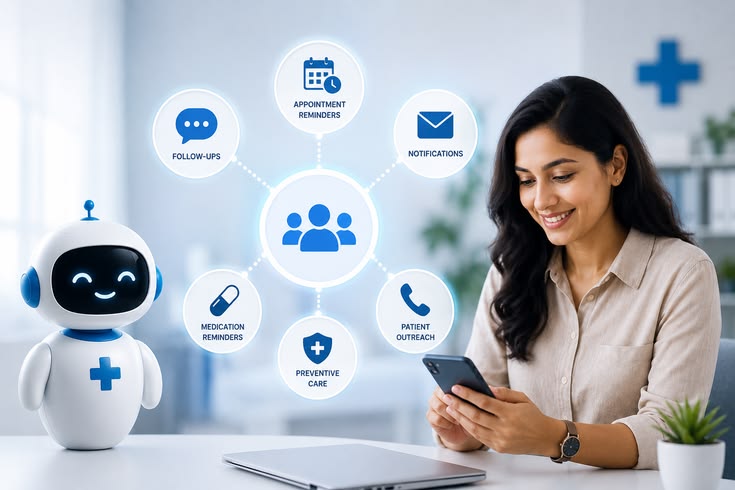
Simplified Appointment Management
Efficient appointment scheduling is essential for smooth healthcare operations.
Healthcare CRM software simplifies scheduling by allowing healthcare providers to:
- Book appointments quickly
- Send automated confirmations
- Issue appointment reminders
- Manage cancellations
- Reschedule visits efficiently
Automated scheduling reduces administrative workload while minimizing missed appointments and improving patient satisfaction.
Improved Patient Communication
Effective communication builds trust and enhances the patient experience.
Healthcare CRM software enables healthcare organizations to communicate with patients through multiple channels, including:
- SMS
- Mobile applications
- Patient portals
- Phone notifications
Automated communication ensures patients receive timely reminders, health updates, prescription notifications, and follow-up messages without placing additional pressure on administrative staff.
Automation of Routine Tasks
Healthcare facilities perform numerous repetitive administrative activities every day. Automating these tasks allows staff to focus more on patient care.
Healthcare CRM software can automate:
- Appointment reminders
- Patient registration workflows
- Follow-up communications
- Feedback requests
- Preventive care notifications
- Health campaign messages
Automation reduces manual errors while improving operational consistency.
Better Care Coordination
Patients often receive treatment from multiple departments and healthcare professionals.
Healthcare CRM software improves coordination by providing authorized staff with access to updated patient information and communication history. This enables seamless collaboration between departments, resulting in more efficient and consistent patient care.
Better coordination also reduces duplicate administrative work and improves clinical decision-making.
Enhanced Patient Engagement
Patient engagement is an important factor in achieving positive healthcare outcomes.
Healthcare CRM software encourages active participation through:
- Personalized health reminders
- Preventive care notifications
- Educational content
- Wellness campaign updates
- Chronic disease management support
- Regular follow-up communication
Engaged patients are more likely to attend appointments, follow treatment plans, and participate in preventive healthcare programs.
Data-Driven Decision Making
Healthcare organizations generate valuable operational and patient data every day.
Healthcare CRM software transforms this information into meaningful insights that support better decision-making.
Organizations can analyze:
- Appointment trends
- Patient satisfaction
- Communication effectiveness
- Service demand
- Patient retention
- Operational performance
These insights help healthcare providers identify opportunities for improvement and optimize resource allocation.
Improved Patient Retention
Building long-term relationships with patients contributes to sustainable healthcare growth.
Healthcare CRM software supports patient retention by delivering consistent communication, personalized experiences, and convenient access to healthcare services.
Patients who receive timely reminders, personalized follow-ups, and responsive support are more likely to return for future care and recommend the healthcare provider to others.
Streamlined Marketing and Outreach
Healthcare organizations often conduct awareness campaigns for preventive care, health screenings, vaccinations, and wellness programs.
Healthcare CRM software simplifies campaign management by allowing providers to:
- Segment patient groups
- Schedule targeted communications
- Monitor campaign performance
- Personalize outreach messages
- Increase participation in healthcare programs
Targeted communication improves engagement while making marketing efforts more efficient.
Secure Patient Data Management
Protecting patient information is a critical responsibility for every healthcare organization.
Healthcare CRM software includes security features such as:
- Role-based access controls
- Data encryption
- Secure authentication
- Activity monitoring
- Regular backups
- Compliance with healthcare data privacy standards
Strong security measures help protect sensitive patient information while maintaining trust.
Integration with Healthcare Systems
Modern Healthcare CRM software can integrate with existing healthcare technologies, including:
- Electronic Health Records (EHR)
- Electronic Medical Records (EMR)
- Laboratory Information Systems
- Billing platforms
- Telemedicine solutions
- Patient portals
These integrations improve workflow efficiency by reducing duplicate data entry and enabling seamless information sharing.
Operational Efficiency Across Departments
Healthcare CRM software supports multiple departments, including:
- Reception and patient registration
- Appointment management
- Customer service
- Marketing
- Patient support
- Administration
By connecting these departments through a centralized platform, healthcare organizations improve collaboration and reduce operational delays.
Scalability for Growing Healthcare Organizations
As healthcare providers expand, they require systems that can grow with increasing patient volumes and service offerings.
Healthcare CRM software is designed to scale, allowing organizations to add new users, departments, communication channels, and services without disrupting existing operations.
This flexibility supports long-term organizational growth.
Best Practices for Implementing Healthcare CRM Software
Healthcare organizations can maximize the value of CRM software by following several best practices:
- Maintain accurate patient records.
- Train staff on CRM features and workflows.
- Automate repetitive administrative tasks.
- Personalize patient communication.
- Monitor operational performance regularly.
- Ensure strong data security measures.
- Integrate CRM with existing healthcare systems.
- Continuously evaluate patient feedback to improve services.
Implementing these practices helps healthcare providers achieve greater efficiency while enhancing the overall patient experience.
Understanding Healthcare CRM Software for Better Healthcare Operations highlights the importance of digital solutions in modern healthcare management. By centralizing patient information, automating routine tasks, improving communication, streamlining appointment scheduling, and supporting data-driven decisions, Healthcare CRM software enables healthcare organizations to operate more efficiently while delivering exceptional patient care.
As healthcare continues to evolve, adopting a comprehensive CRM solution can strengthen operational performance, improve patient satisfaction, and support sustainable growth. Healthcare providers that invest in advanced CRM technology are better equipped to meet changing patient expectations while delivering high-quality, coordinated, and patient-centered healthcare services.