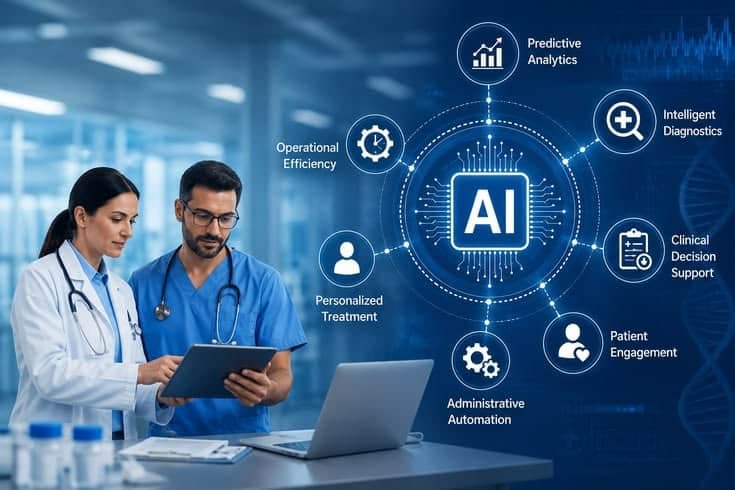
Future Trends of CRM Automation in Healthcare
In today’s fast-evolving digital landscape, the healthcare industry is undergoing a massive transformation driven by technology, data, and automation. One

In today’s fast-evolving digital landscape, the healthcare industry is undergoing a massive transformation driven by technology, data, and automation. One of the most impactful innovations shaping modern healthcare operations is CRM automation. A well-integrated Customer Relationship Management (CRM) system not only streamlines administrative processes but also enhances patient engagement, operational efficiency, and overall care quality.
As automation technologies advance, the future trends of CRM automation in healthcare are set to revolutionize how medical institutions manage relationships, data, and workflows. This blog explores the emerging trends, innovations, and benefits that will define the next phase of healthcare CRM automation.
The Growing Importance of CRM Automation in Healthcare
Healthcare organizations today manage enormous amounts of data—from patient records and appointment histories to billing and communication logs. Manually managing this information is inefficient and prone to errors. CRM automation helps healthcare providers overcome these challenges by automating repetitive tasks, integrating systems, and personalizing patient interactions.
Automated CRM systems not only handle administrative workflows but also support strategic decision-making through real-time analytics and AI-powered insights. As the healthcare industry embraces digital transformation, CRM automation will become the backbone of connected, patient-centric ecosystems.
1. AI-Driven Predictive Analytics for Patient Care
One of the most significant future trends of CRM automation in healthcare is the integration of Artificial Intelligence (AI) and predictive analytics. Modern CRM systems will use machine learning to analyze patient behavior, medical history, and engagement patterns.
Predictive analytics can identify at-risk patients, forecast appointment no-shows, and even recommend preventive care plans. For example, AI algorithms could analyze CRM data to detect patterns in chronic disease patients and automatically trigger follow-up reminders or lifestyle advice.
This trend will help healthcare providers move from reactive care to proactive, data-driven decision-making—ultimately improving outcomes and reducing costs.
2. Integration of CRM with IoT and Wearable Devices
The Internet of Things (IoT) is transforming healthcare monitoring and data collection. Smart devices like fitness trackers, glucose monitors, and heart-rate sensors generate real-time patient data. When integrated with CRM automation systems, this data can be automatically captured, analyzed, and used to enhance patient engagement.
For instance, a wearable device can sync with the CRM to alert healthcare staff about abnormal readings, prompting immediate follow-up. Automated workflows can schedule appointments or send personalized health recommendations to the patient’s app.
This seamless integration creates a more connected ecosystem that bridges the gap between continuous monitoring and timely medical intervention.
3. Personalized Patient Communication through Automation
Patients today expect the same level of personalization they experience in other industries. Future CRM automation tools will leverage advanced segmentation, AI chatbots, and automated communication workflows to deliver customized interactions at scale.
For example, a CRM can automatically send appointment reminders, preventive care tips, or wellness updates based on individual health profiles. Intelligent chatbots can handle FAQs, schedule appointments, and provide medication reminders—all without human intervention.
By combining personalization with automation, healthcare providers can strengthen patient relationships while reducing administrative burden.
4. Voice and Conversational AI Integration
Voice assistants and conversational AI are becoming increasingly prevalent in healthcare CRM systems. In the future, medical staff may use voice commands to update patient records, retrieve data, or generate reports, improving workflow efficiency and reducing manual input.
Similarly, patients could interact with voice-enabled CRM systems to schedule visits, refill prescriptions, or check test results. These AI-driven virtual assistants make healthcare communication faster, easier, and more accessible—particularly for elderly or visually impaired patients.
5. Robotic Process Automation (RPA) for Administrative Efficiency
Robotic Process Automation (RPA) is revolutionizing backend healthcare operations by automating repetitive, rule-based tasks. Integrated with CRM systems, RPA can handle patient data entry, billing updates, insurance verification, and follow-up reminders without manual intervention.
For instance, when a patient books an appointment, RPA bots can automatically update the CRM, verify insurance details, send reminders, and even process billing. This not only improves accuracy but also frees up healthcare staff to focus on patient care rather than paperwork.
6. Enhanced Data Security and Compliance Automation
As healthcare CRM systems collect vast amounts of sensitive patient data, cybersecurity and regulatory compliance become paramount. Future CRM automation tools will include built-in features for data encryption, access control, and compliance monitoring (e.g., HIPAA or GDPR).
Automation will also play a key role in tracking audit logs, managing consent forms, and alerting administrators to potential data breaches. By integrating compliance processes into CRM automation, healthcare organizations can ensure data integrity and patient trust while reducing the risk of human error.
7. Omnichannel Patient Experience Management
Future CRM systems will focus on providing a unified, omnichannel experience for patients. Automation will allow healthcare providers to connect with patients seamlessly across channels such as email, SMS, mobile apps, social media, and telemedicine platforms.
For instance, a patient could book an appointment via social media, receive an SMS confirmation, get a mobile reminder, and complete a post-visit survey—all coordinated through automated CRM workflows.
This consistent communication across multiple touchpoints enhances engagement, satisfaction, and loyalty.
8. Integration with Telehealth Platforms
The rise of telemedicine during the past few years has made virtual care a staple in healthcare delivery. Future CRM automation trends will focus on tighter integration between CRM and telehealth systems.
Automated CRMs will handle scheduling, digital documentation, follow-up reminders, and virtual visit summaries—creating a seamless experience for both doctors and patients. Automation can also ensure continuity of care by logging telehealth interactions directly into patient profiles for future reference.
9. Data-Driven Decision Making and Insights
As CRMs evolve, automation will play a central role in transforming raw data into actionable insights. Real-time dashboards powered by AI will automatically generate performance reports, patient satisfaction metrics, and operational analytics.
Healthcare administrators can use these insights to identify bottlenecks, allocate resources efficiently, and improve overall service delivery. Predictive analytics will also help forecast patient trends, seasonal demands, and revenue cycles, enabling smarter strategic planning.
10. Cloud-Based and Mobile-First CRM Automation
The future of healthcare CRM automation will be cloud-based and mobile-first, ensuring flexibility, accessibility, and scalability. Cloud technology allows healthcare professionals to access patient information securely from any location, facilitating collaboration across multiple branches.
Mobile-enabled CRMs empower doctors, nurses, and field staff to update records, manage appointments, and communicate with patients in real time. This trend enhances productivity and ensures that healthcare remains responsive and agile in an increasingly digital world.
Conclusion
The future trends of CRM automation in healthcare point toward a smarter, more connected, and patient-centered ecosystem. With innovations such as AI, IoT integration, voice automation, and predictive analytics, healthcare organizations can enhance efficiency, personalize care, and make informed decisions based on real-time insights.
As automation continues to evolve, CRM systems will no longer be just administrative tools—they will become strategic assets that drive better patient outcomes and business performance.
In the coming years, healthcare providers that embrace CRM automation will lead the way in delivering efficient, empathetic, and data-driven care—transforming the future of healthcare as we know it.
The Doctorna editorial desk writes about healthcare operations, patient experience and the systems clinics use to connect them.