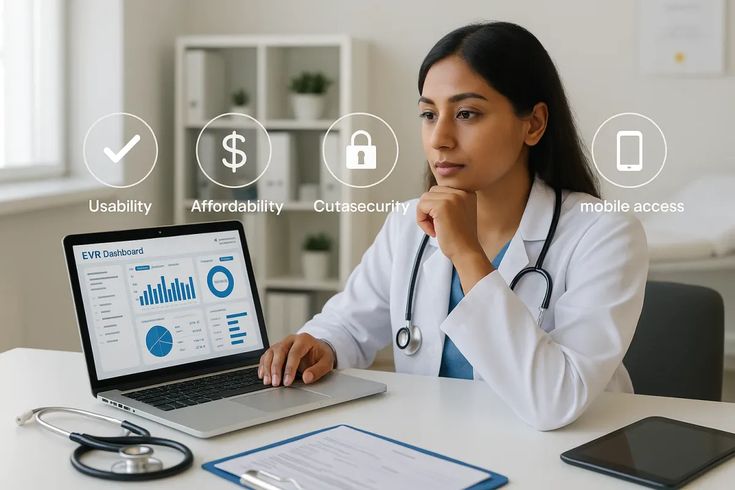


Healthcare organizations manage large volumes of information every day, including patient records, medical images, laboratory reports, appointment details, billing information, and operational data. Traditional systems can make storing, accessing, and sharing this information more challenging as healthcare organizations grow. Cloud computing in healthcare provides a flexible digital infrastructure that can support data management, collaboration, scalability, and access to healthcare applications.
By moving selected systems and workloads to cloud environments, healthcare organizations can improve operational efficiency while creating a more connected digital ecosystem.
Centralizes Healthcare Data
One of the key benefits of cloud computing is centralized data storage. Healthcare organizations can store information within cloud-based systems rather than relying entirely on local servers or physical storage.
Authorized users can access relevant information through connected applications according to their permissions. This can make it easier for healthcare teams to manage patient information, administrative records, reports, and other digital resources.
Centralized systems can also reduce the need to maintain multiple disconnected storage environments.
Enables Secure Remote Access
Healthcare professionals and administrative teams may need to access information from different locations. Cloud-based applications can support remote access to authorized data through secure connections.
For example, healthcare professionals working across multiple facilities may be able to access relevant records without depending on a specific physical computer or local server.
Access controls and authentication mechanisms can help ensure that only authorized users can view or manage sensitive information.
Supports Healthcare Collaboration
Effective collaboration is essential when multiple teams are involved in healthcare operations. Cloud platforms can allow authorized users to work with shared information from connected systems.
Clinical, administrative, laboratory, and management teams can access relevant information according to their roles. This can reduce delays caused by manually transferring files or relying on separate systems.
Cloud-based collaboration can be especially useful for organizations operating across multiple departments or locations.
Improves Scalability
Healthcare organizations can experience changing requirements as patient volumes, services, staff numbers, and digital applications expand. Traditional infrastructure may require organizations to purchase and configure additional hardware whenever capacity increases.
Cloud computing provides scalable infrastructure that can be adjusted according to organizational needs. Businesses can increase computing resources or storage capacity as requirements change.
This flexibility can support healthcare organizations during periods of growth without requiring all infrastructure to be managed locally.
Supports Electronic Health Records
Cloud technology can support electronic health record systems by providing infrastructure for storing and managing digital patient information.
Depending on the system architecture, healthcare organizations can use cloud-based platforms to manage clinical notes, medical histories, laboratory results, prescriptions, and other information.
Cloud-based EHR and EMR systems can also support integration with other healthcare applications, allowing information to move more efficiently between connected workflows.
Enables Data Backup and Recovery
Healthcare data is highly valuable, making backup and recovery important parts of digital infrastructure planning. Hardware failures, software problems, accidental deletion, or other disruptions can affect access to important information.
Cloud environments can support automated backup and recovery strategies. Organizations can establish backup policies that help protect data and support business continuity.
A well-designed recovery strategy can help healthcare organizations restore critical systems more efficiently after an unexpected disruption.
Supports Telehealth Services
Telehealth depends on digital technologies that allow healthcare professionals and patients to communicate remotely. Cloud computing can provide infrastructure for applications supporting virtual consultations, appointment management, communication, and related services.
Cloud-based systems can also help connect telehealth platforms with other healthcare applications, depending on available integrations.
This can contribute to more connected digital healthcare experiences.
Enables Healthcare Analytics
Healthcare organizations generate significant amounts of data. Cloud computing can provide scalable infrastructure for processing and analyzing this information.
Healthcare analytics can help organizations identify operational patterns, monitor service utilization, evaluate performance, and support data-driven decision-making.
Advanced cloud environments can also support technologies such as artificial intelligence and machine learning when appropriate infrastructure and governance are in place.
Supports Integration With Healthcare Applications
Modern healthcare organizations often use multiple digital systems, including EMR platforms, laboratory systems, pharmacy applications, billing software, patient communication tools, and scheduling platforms.
Cloud infrastructure can support integration between these systems through APIs and other interoperability technologies.
Better integration can reduce information silos and help create more connected workflows. However, integration should be designed carefully to maintain data accuracy, privacy, and security.
Strengthens Business Continuity
Healthcare services need to remain operational even when unexpected technical problems occur. Cloud-based infrastructure can support business continuity by reducing dependence on a single physical server or location.
Redundant infrastructure, backup systems, monitoring, and disaster recovery strategies can help organizations prepare for disruptions.
The exact level of resilience depends on the cloud architecture, provider capabilities, configuration, and organizational recovery plan.
Supports Security and Compliance
Healthcare data requires strong privacy and security controls. Cloud computing itself does not automatically guarantee security. Healthcare organizations need appropriate policies, access controls, encryption, monitoring, auditing, and data governance.
Organizations should also ensure that cloud services and configurations align with applicable healthcare privacy and regulatory requirements in their operating regions.
Security responsibilities are generally shared between the cloud provider and the healthcare organization, making proper configuration and ongoing monitoring essential.
The Future of Cloud Computing in Healthcare
The role of cloud technology in healthcare is expected to continue expanding as organizations adopt digital health platforms, connected devices, analytics, artificial intelligence, and remote care solutions.
A well-designed cloud strategy can provide the infrastructure needed to support these technologies while improving flexibility and accessibility.
However, healthcare organizations should evaluate cloud solutions based on security, compliance, interoperability, performance, cost, scalability, and long-term business requirements.
Cloud computing in healthcare can support centralized data management, secure remote access, collaboration, scalability, backup and recovery, telehealth, analytics, and system integration. By providing flexible digital infrastructure, cloud technology can help healthcare organizations modernize their operations and create more connected workflows.
Successful cloud adoption requires more than moving data to an online environment. Healthcare organizations need thoughtful architecture, strong security controls, appropriate governance, and reliable integration strategies. With the right approach, cloud computing can become an important foundation for modern healthcare technology.