
Artificial intelligence is rapidly changing the way healthcare services are delivered, managed, and experienced. In the UAE, the healthcare sector is increasingly adopting digital technologies to support better patient experiences, improve operational efficiency, and strengthen data-driven decision-making. The country’s digital health ecosystem already incorporates artificial intelligence, information and communication technology, and connected technologies to support healthcare delivery.
The future of AI-powered healthcare platforms in the UAE is expected to move beyond basic automation. Healthcare platforms can increasingly connect patients, healthcare professionals, administrators, medical data, and digital services within intelligent ecosystems.
Growing Role of AI in UAE Healthcare
The UAE has positioned artificial intelligence as an important part of its long-term digital transformation. The UAE Strategy for Artificial Intelligence aims to expand AI adoption across government services and sectors, while healthcare is identified as an important area where AI can help address national challenges.
Healthcare platforms can use AI to analyze information, automate repetitive tasks, identify patterns, and provide decision-support capabilities. This can help healthcare organizations manage growing volumes of information while allowing medical professionals to focus more attention on patient care.
The Ministry of Health and Prevention has also stated that it has developed a plan for extensive AI integration into medical services, aligned with the UAE AI Strategy and UAE Centennial 2071.
Smarter Patient Management
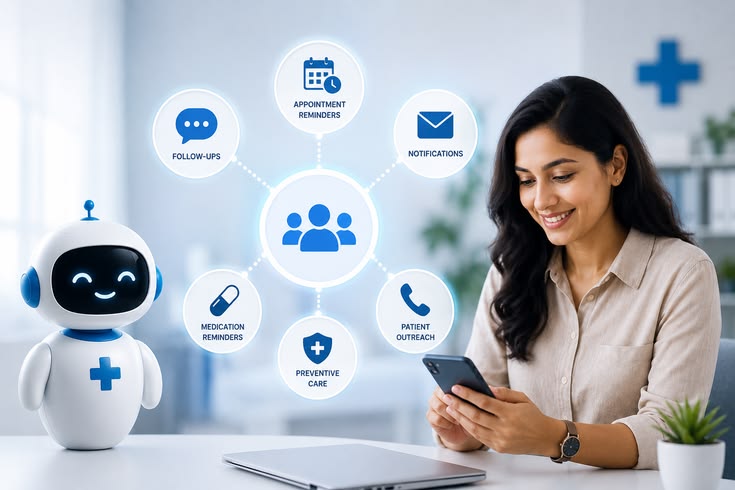
One of the major opportunities for AI-powered healthcare platforms is improving patient management. Traditional healthcare processes can involve multiple appointments, phone calls, reminders, forms, and follow-ups. Intelligent platforms can bring many of these activities together.
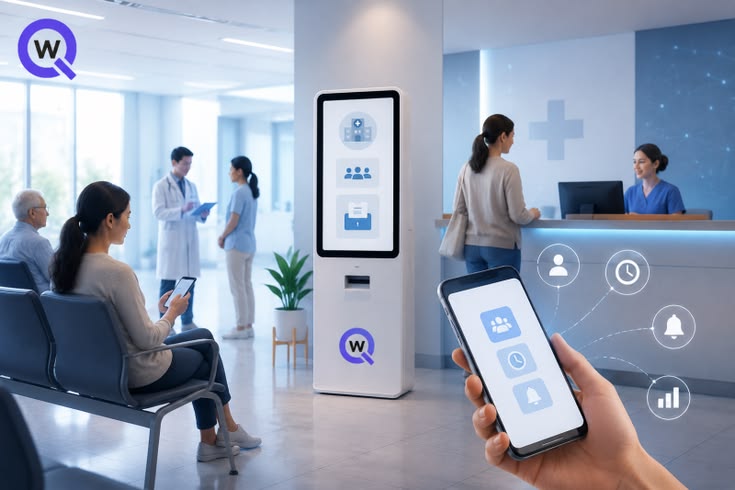
AI-powered systems can help automate appointment reminders, patient communication, follow-up scheduling, basic information requests, and administrative workflows. By connecting these functions within one platform, healthcare providers can create a smoother patient journey.
AI can also help personalize communication based on patient information and previous interactions. This can make digital healthcare experiences more relevant while reducing unnecessary administrative work.
AI-Assisted Clinical Decision Support
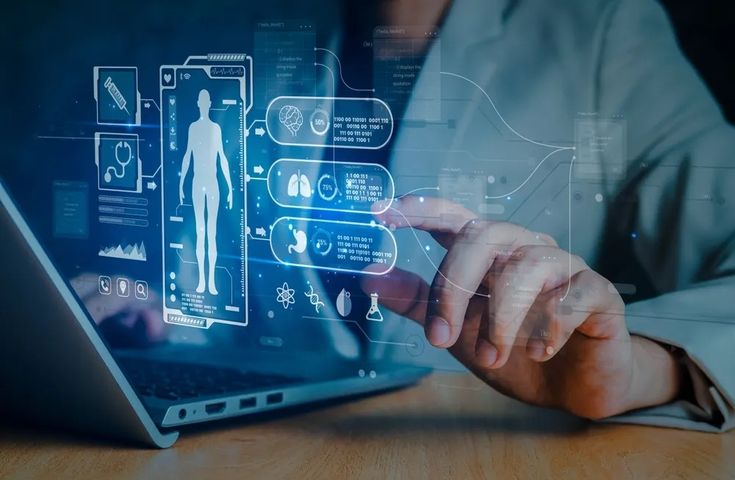
AI can increasingly support healthcare professionals by analyzing large volumes of medical information. Healthcare platforms may use machine learning and other AI technologies to identify patterns, highlight relevant information, and support clinical decision-making.
The purpose is not to replace healthcare professionals. Instead, AI can act as an additional analytical tool that helps clinicians access information more efficiently.
For example, an AI-enabled platform could organize patient history, laboratory information, imaging data, and other relevant records so that authorized healthcare professionals can review information more efficiently.
Predictive Healthcare and Early Intervention
The future of healthcare is expected to place greater emphasis on prevention rather than only treating illness after symptoms become serious. AI can contribute to this shift through predictive analytics.
By analyzing appropriate health data, AI-powered systems may identify patterns associated with potential health risks. This can support earlier intervention and encourage patients to seek professional care when appropriate.
The UAE’s digital health direction includes using technologies such as AI to collect data and support prediction of clinical outcomes.
Predictive capabilities could become particularly valuable for chronic disease management, remote monitoring, preventive healthcare, and population health programs.
Integration With Wearable Devices
Wearable technology can generate continuous information related to activity, heart rate, sleep, and other health indicators. Future healthcare platforms can connect suitable wearable data with patient management systems.
AI can help analyze large amounts of information and identify meaningful trends. Instead of requiring healthcare professionals to manually review every data point, intelligent systems can highlight information that may require attention.
This could support remote patient monitoring and more proactive healthcare management when implemented under appropriate clinical and regulatory frameworks.
Personalized Healthcare Experiences
Every patient has different needs, preferences, medical histories, and healthcare goals. AI-powered platforms can help create more personalized digital experiences.
For example, a healthcare platform could provide customized reminders, educational information, appointment recommendations, or follow-up workflows based on relevant patient information.
Personalization can also improve patient engagement. When healthcare communication is timely and relevant, patients may find it easier to stay connected with their healthcare providers and follow recommended care plans.
AI-Powered Healthcare Communication
Communication is another area where AI can have a significant impact. Intelligent chat systems and virtual assistants can help patients find general information, navigate digital services, schedule appointments, and receive routine notifications.
Multilingual capabilities may be particularly valuable in the UAE because healthcare providers serve diverse communities. AI-powered communication tools can help create more accessible digital experiences while directing clinical questions to qualified healthcare professionals when human intervention is required.
Healthcare Workflow Automation
Healthcare organizations manage numerous administrative processes every day. AI-powered platforms can automate selected repetitive tasks such as data organization, appointment coordination, document processing, reminders, and workflow routing.
Automation can reduce manual workloads and help organizations use staff resources more efficiently.
Healthcare platforms may also provide dashboards that help administrators monitor appointments, patient engagement, operational activity, and other important performance indicators.
Importance of Data Privacy and Security
The growth of AI in healthcare also increases the importance of responsible data management. Healthcare information is highly sensitive, and AI systems require strong safeguards around data access, storage, processing, and sharing.
UAE Federal Law No. 2 of 2019 regulates the use of ICT in healthcare and emphasizes the confidentiality, integrity, security, and authorized availability of health data.
Future AI-powered healthcare platforms therefore need privacy and security to be built into their architecture rather than treated as an afterthought. Access controls, secure data management, appropriate authorization, monitoring, and responsible AI practices will remain essential.
Interoperability and Connected Healthcare
The future of healthcare platforms will depend heavily on their ability to communicate with other systems. Hospitals, clinics, laboratories, pharmacies, insurance providers, telehealth services, and patient-facing applications may all generate valuable information.
Interoperable platforms can help reduce information silos and create more connected healthcare workflows. UAE health policies also emphasize integration and linkage between systems and the development of unified health information capabilities.
This connected approach can support better information flow while helping healthcare organizations build more efficient digital ecosystems.
What the Future May Look Like
The next generation of AI-powered healthcare platforms in the UAE is likely to combine AI, cloud technology, analytics, automation, connected devices, and digital communication within unified platforms.
Instead of using separate tools for appointments, communication, patient records, analytics, and follow-ups, healthcare organizations may increasingly adopt integrated systems that connect these functions.
However, successful implementation will depend on more than technology. Healthcare organizations will need appropriate governance, skilled professionals, secure infrastructure, reliable data, regulatory compliance, and strong human oversight.