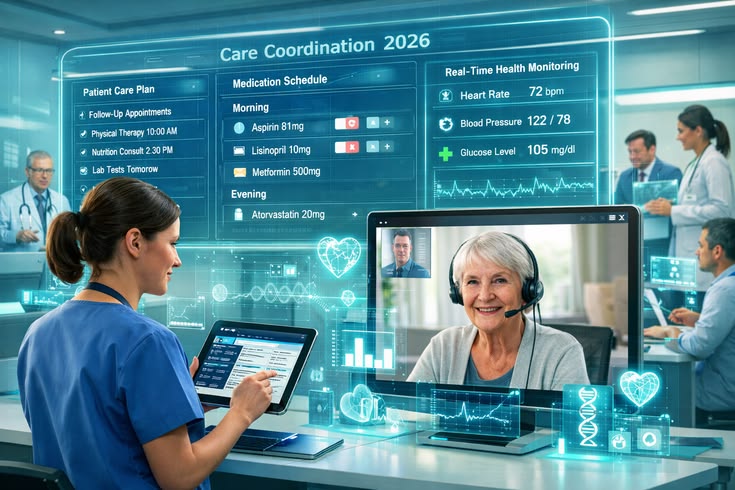


Healthcare organizations are increasingly adopting cloud technology to improve the way they manage information, communicate with patients, and coordinate daily operations. Cloud-Based Healthcare Platforms provide access to digital healthcare tools and information through secure internet-based infrastructure, helping organizations reduce dependence on traditional on-site systems. From scalability and collaboration to data accessibility and operational efficiency, cloud technology can offer several advantages for modern healthcare environments.
Centralized Access to Healthcare Information
One of the major benefits of cloud-based healthcare platforms is centralized access to information. Authorized healthcare professionals can access relevant records, schedules, reports, and other digital resources through connected devices.
Instead of relying on information stored across multiple physical systems, cloud platforms can provide a more unified environment for managing healthcare data and applications.
Improved Collaboration
Healthcare delivery often involves multiple departments and professionals. Doctors, nurses, administrative teams, specialists, and other authorized staff may need access to relevant information.
Cloud-based platforms can support collaboration by allowing authorized users to work with shared information from different locations. This can improve coordination and reduce communication gaps between teams.
Greater Scalability
Healthcare organizations can grow over time, increasing the number of patients, staff members, departments, and services they manage. Traditional infrastructure may require significant hardware investments to support this growth.
Cloud-based systems can offer greater scalability by allowing organizations to adjust storage, users, and computing resources according to changing requirements. This flexibility can be useful for both growing healthcare providers and established organizations.
Remote Accessibility
Cloud technology makes it possible for authorized users to access healthcare applications remotely, depending on the platform and organizational policies.
This can support healthcare teams working across multiple facilities or locations. Remote accessibility can also contribute to flexible workflows while maintaining controlled access to important systems.
Reduced Infrastructure Requirements
Traditional healthcare IT environments may require physical servers, storage equipment, and dedicated infrastructure. Maintaining this hardware can involve additional costs, technical resources, and maintenance responsibilities.
Cloud platforms can reduce the need for extensive on-site infrastructure because computing resources and storage are managed through cloud environments. Organizations can therefore focus more resources on healthcare operations and digital service delivery.
Automatic Updates and Maintenance
Many cloud-based platforms support centralized software updates and maintenance. Instead of manually updating applications across multiple individual systems, updates can often be managed centrally by the technology provider.
This can help organizations access newer features, performance improvements, and security updates while reducing some of the technical workload associated with maintaining traditional software environments.
Better Data Backup and Recovery
Healthcare information is valuable and requires appropriate protection against data loss. Cloud platforms can provide backup and disaster recovery capabilities depending on the service architecture.
Regular backups and recovery strategies can help organizations prepare for hardware failures, system disruptions, or other unexpected events. Healthcare providers should still evaluate the backup policies and recovery capabilities of any cloud solution before implementation.
Enhanced Security Capabilities
Cloud-based healthcare platforms can include security features such as encryption, authentication, role-based access controls, monitoring, and audit logs.
However, security depends on both the technology provider and the healthcare organization’s implementation practices. Strong passwords, access management, staff training, secure configurations, and compliance processes remain essential for protecting healthcare information.
Supports Integration
Modern healthcare organizations often use multiple digital systems, including electronic health records, healthcare CRM platforms, patient portals, telehealth systems, billing applications, and scheduling tools.
Cloud-based platforms can support integration between different applications through APIs and other technologies. Better integration can reduce data duplication and help create more connected healthcare workflows.
Supports Telehealth Services
Cloud technology provides an important foundation for many telehealth services. Virtual consultations, digital patient communication, appointment management, and remote monitoring systems can use cloud infrastructure to deliver services to patients and healthcare professionals.
This can help healthcare organizations expand digital care options while supporting access from different locations.
Improves Operational Efficiency
Cloud-based platforms can bring multiple healthcare processes into connected digital workflows. Scheduling, patient communication, documentation, reporting, and administrative tasks can be managed through integrated systems.
Automation and centralized information can reduce repetitive manual work and help staff manage daily responsibilities more efficiently.
Supports Data-Driven Decision-Making
Healthcare organizations generate large amounts of information every day. Cloud platforms can help collect and organize data from different departments and applications.
Reporting and analytics tools can provide insights into operational performance, patient engagement, resource utilization, and other important metrics. These insights can support more informed planning and decision-making.
Cost Flexibility
Cloud technology can provide a different cost structure compared with maintaining extensive physical IT infrastructure. Depending on the provider and pricing model, organizations may pay for the services and resources they require rather than making large investments in on-site hardware.
Organizations should evaluate total costs, subscription fees, implementation expenses, security requirements, integration needs, and long-term usage before selecting a solution.
Supports Business Continuity
Healthcare organizations need systems that remain available during unexpected disruptions. Cloud infrastructure can support business continuity through distributed systems, backups, redundancy, and disaster recovery capabilities.
The exact level of availability depends on the architecture and service agreement, so organizations should carefully review uptime commitments and recovery procedures.