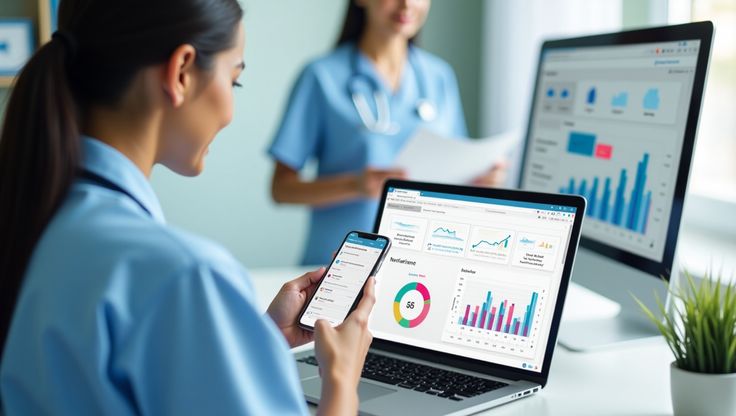

Hospital administration involves managing a wide range of responsibilities, including patient registration, appointment scheduling, communication, billing, staff coordination, and operational planning. As healthcare organizations continue to embrace digital transformation, efficient management systems have become essential for delivering quality patient care while reducing administrative burdens. Understanding How Healthcare CRM Helps Improve Hospital Administration can help hospitals optimize daily operations, enhance patient satisfaction, and improve overall organizational performance.
Healthcare Customer Relationship Management (CRM) software is designed to centralize patient information, automate administrative tasks, and strengthen communication across departments. By integrating various processes into a single platform, Healthcare CRM enables hospital administrators to make informed decisions, improve efficiency, and provide a better healthcare experience.
What Is a Healthcare CRM?
Healthcare CRM is a specialized software solution that helps hospitals and healthcare providers manage patient relationships, communication, appointments, follow-ups, and administrative workflows.
Unlike traditional CRM systems, Healthcare CRM is built specifically for the healthcare industry, supporting secure data management, regulatory compliance, and seamless coordination between medical and administrative teams.
Why Hospital Administration Needs Healthcare CRM
Managing hospital operations manually can be complex and time-consuming. Administrative staff often handle large volumes of patient records, appointment requests, billing inquiries, and communication, increasing the risk of delays and errors.
Healthcare CRM simplifies these processes by automating repetitive tasks, organizing patient information, and providing real-time access to essential data. This enables administrators to focus on improving operational efficiency and patient care.
Centralized Patient Information
One of the key ways Healthcare CRM Helps Improve Hospital Administration is by maintaining all patient information in a centralized database.
Hospital staff can quickly access:
- Patient profiles
- Contact details
- Appointment history
- Medical preferences
- Communication records
- Billing information
- Follow-up schedules
Having a single source of accurate information reduces duplication, minimizes errors, and improves collaboration between departments.
Streamlined Appointment Management
Healthcare CRM automates appointment scheduling, confirmations, and reminders.
Key features include:
- Online appointment booking
- Real-time scheduling
- Automated confirmations
- SMS and email reminders
- Appointment rescheduling
- Waiting list management
Efficient scheduling reduces administrative workload while minimizing missed appointments.
Improved Patient Communication
Effective communication is essential for both patient satisfaction and smooth hospital operations.
Healthcare CRM enables hospitals to send:
- Appointment reminders
- Admission updates
- Test result notifications
- Follow-up instructions
- Health education messages
- Preventive care reminders
Consistent communication keeps patients informed and strengthens trust in healthcare services.
Enhanced Department Coordination
Hospitals involve multiple departments working together to deliver patient care.
Healthcare CRM improves internal collaboration by allowing staff to:
- Share patient updates
- Coordinate referrals
- Track treatment progress
- Manage discharge planning
- Monitor communication history
Better coordination reduces delays and supports more efficient patient management.
Automated Administrative Tasks
Routine administrative work can consume significant staff time.
Healthcare CRM automates tasks such as:
- Patient registration
- Appointment reminders
- Follow-up scheduling
- Email campaigns
- Patient surveys
- Report generation
Automation increases productivity while reducing manual errors.
Better Resource Management
Hospital administrators must allocate staff, rooms, and medical resources efficiently.
Healthcare CRM provides insights into:
- Appointment volumes
- Department workloads
- Patient flow
- Service demand
- Resource utilization
These insights support more effective planning and operational decision-making.
Improved Billing and Financial Processes
Healthcare CRM can integrate with billing systems to simplify financial management.
Benefits include:
- Accurate patient billing
- Payment tracking
- Invoice management
- Insurance coordination
- Financial reporting
Streamlined billing reduces administrative complexity and improves revenue management.
Enhanced Patient Engagement
Healthcare CRM strengthens patient relationships by offering convenient digital services, including:
- Online appointment scheduling
- Secure patient portals
- Personalized health reminders
- Digital communication
- Feedback collection
Engaged patients are more likely to remain loyal and participate actively in their healthcare.
Data Analytics and Reporting
Healthcare CRM provides administrators with detailed reports and performance metrics.
Hospitals can monitor:
- Patient satisfaction
- Appointment attendance
- Operational efficiency
- Communication performance
- Revenue trends
- Patient retention
These insights help identify opportunities for continuous improvement.
Secure Data Management
Hospitals handle highly sensitive patient information that requires strong protection.
Healthcare CRM systems include security features such as:
- Data encryption
- Secure authentication
- Role-based access
- Audit trails
- Automatic backups
These measures help protect patient privacy and support compliance with healthcare regulations.
Integration with Hospital Systems
Healthcare CRM integrates with various hospital technologies, including:
- Electronic Health Records (EHR)
- Electronic Medical Records (EMR)
- Laboratory Information Systems
- Billing software
- Telemedicine platforms
- Pharmacy management systems
Integration reduces duplicate data entry and creates a more connected healthcare environment.
Benefits of Healthcare CRM for Hospital Administration
Implementing How Healthcare CRM Helps Improve Hospital Administration delivers several advantages:
- Increased operational efficiency
- Improved patient communication
- Better staff collaboration
- Reduced administrative workload
- Lower appointment no-show rates
- Faster access to patient information
- Enhanced patient satisfaction
- Better resource allocation
- Improved financial management
- Stronger data security
These benefits contribute to smoother hospital operations and higher-quality patient care.
Best Practices for Implementation
To maximize the effectiveness of Healthcare CRM:
- Define clear implementation goals.
- Train administrative and clinical staff.
- Integrate CRM with existing hospital systems.
- Maintain accurate patient records.
- Automate repetitive workflows.
- Monitor key performance indicators.
- Collect patient feedback regularly.
- Update the system as organizational needs evolve.
Following these best practices ensures successful CRM adoption and long-term value.
Future Trends in Healthcare CRM
Healthcare CRM technology continues to advance with innovations such as:
- Artificial intelligence for workflow automation
- Predictive analytics
- Chatbots for patient support
- Telehealth integration
- Mobile healthcare applications
- Remote patient monitoring
- Population health management
- Advanced business intelligence dashboards
These developments will continue improving hospital administration and patient care delivery.