
Healthcare is increasingly moving beyond traditional hospitals and clinics, with more services being delivered in patients’ homes. This shift is creating new opportunities for technology to improve accessibility, coordination, monitoring, and communication. Home Healthcare Digital Transformation involves using digital technologies to make home-based healthcare services more connected, efficient, and patient-focused.
From electronic health records and telehealth to remote monitoring and healthcare management platforms, digital solutions are changing how home healthcare providers organize and deliver care. These technologies can help healthcare teams manage patient information, coordinate caregivers, communicate with families, and monitor patients more effectively.
Understanding Digital Transformation in Home Healthcare
Digital transformation is more than simply replacing paper records with electronic systems. It involves redesigning healthcare processes around digital tools to improve the overall delivery of care.
Home healthcare providers may use digital platforms to manage appointments, caregiver schedules, patient records, treatment plans, billing, communication, and follow-up activities. Connecting these processes can reduce administrative work and improve coordination between patients, caregivers, and healthcare professionals.
A well-planned digital strategy can help home healthcare organizations provide more consistent and responsive services.
Telehealth Expands Access to Care
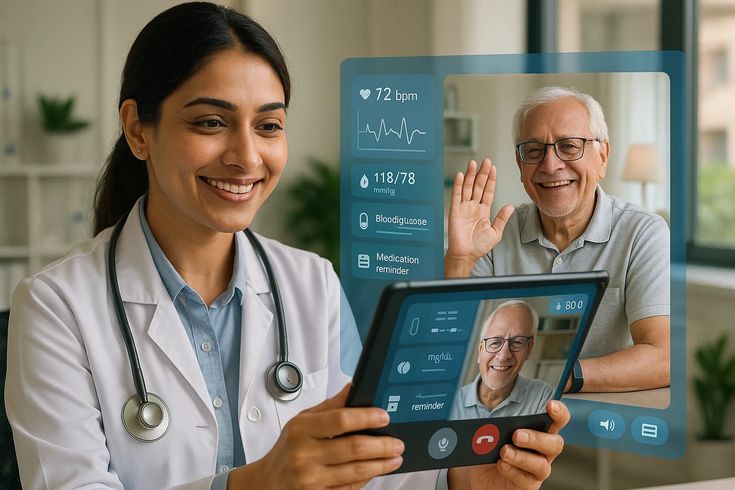
Telehealth is an important part of modern home healthcare. Virtual consultations allow patients to communicate with healthcare professionals without always needing to travel to a clinic or hospital.
This can be particularly useful for follow-up consultations, routine assessments, medication discussions, and certain types of ongoing care. Telehealth can also help healthcare professionals maintain communication with patients between in-person visits.
When appropriately integrated into a broader care model, virtual healthcare can complement rather than replace physical care.
Remote Patient Monitoring
Remote patient monitoring allows healthcare providers to collect health-related information from patients while they remain at home. Connected devices can monitor selected health measurements and transmit information to authorized healthcare teams.
Depending on the patient’s care plan, monitoring may include information such as blood pressure, blood glucose, heart rate, oxygen saturation, or other relevant measurements.
Healthcare professionals can review this information and determine when additional attention may be required. Remote monitoring can support ongoing management while reducing the need for some unnecessary visits.
Electronic Health Records Improve Coordination
Electronic health records provide healthcare teams with a centralized way to manage patient information. In home healthcare, authorized professionals may need access to medical history, medications, treatment plans, visit notes, and other relevant information.
Digital records can make information easier to access and update compared with fragmented paper-based systems. When healthcare professionals have accurate information, they can coordinate care more effectively and reduce unnecessary duplication.
Strong access controls and security measures are essential when handling sensitive healthcare information.
Healthcare CRM and Patient Communication
Digital healthcare CRM platforms can support communication between home healthcare organizations and patients. These systems can help manage inquiries, appointments, reminders, follow-ups, feedback, and other interactions.
Automated notifications can remind patients about scheduled visits or planned activities. Care teams can also use digital communication channels to maintain contact with patients and families.
Better communication can improve the overall patient experience while helping healthcare organizations manage a growing number of interactions.
Caregiver Coordination
Home healthcare often involves multiple caregivers, nurses, physicians, therapists, and family members. Coordinating these participants can become difficult when information is managed manually.
Digital scheduling and care management platforms can help organizations assign visits, track caregiver availability, record completed activities, and communicate important updates.
Real-time access to relevant information can help reduce scheduling conflicts and support better coordination across the care team.
Artificial Intelligence in Home Healthcare
Artificial intelligence is creating additional opportunities for digital transformation. AI-powered systems can analyze healthcare data, identify patterns, automate administrative tasks, and support certain decision-making processes.
For example, AI can help prioritize administrative requests, automate routine communication, summarize information, or identify changes in monitoring data that may require review.
AI should be implemented with appropriate clinical oversight, privacy safeguards, and clear limitations. It should support healthcare professionals rather than replace professional judgment.
Improving Patient Engagement
Digital tools can help patients become more involved in their own care. Mobile applications and patient portals can provide access to appointments, care instructions, educational resources, medication reminders, and communication channels.
Patients and family members can also use digital platforms to stay informed about scheduled services and relevant updates.
Convenient access to information can make home healthcare more transparent and easier to manage.
Data Security and Privacy
Digital transformation also increases the importance of healthcare cybersecurity. Home healthcare systems may contain highly sensitive patient information, making security a critical consideration.
Organizations should implement appropriate authentication, encryption, access controls, secure communication systems, regular security monitoring, and staff training.
Privacy should be considered throughout the design and implementation of digital healthcare solutions rather than treated as an afterthought.
Benefits for Home Healthcare Providers
Digital transformation can provide several operational benefits. Automated workflows can reduce repetitive administrative tasks, while centralized information can improve coordination. Digital scheduling can help organizations manage caregivers more efficiently, and analytics can provide insights into service utilization and operational performance.
These improvements can allow healthcare teams to spend more time focusing on patient care rather than administrative processes.
The Future of Home Healthcare
The future of Home Healthcare Digital Transformation will likely involve greater integration between telehealth, remote monitoring, mobile applications, electronic health records, AI, healthcare CRM systems, and connected medical devices.
The goal is not simply to introduce more technology but to create a connected care environment that supports patients and healthcare professionals. Organizations that combine digital innovation with strong security, human-centered design, and effective clinical processes can build more efficient and accessible home healthcare services.
As healthcare continues to evolve, digital transformation can play an important role in bringing high-quality, connected care closer to where patients live.