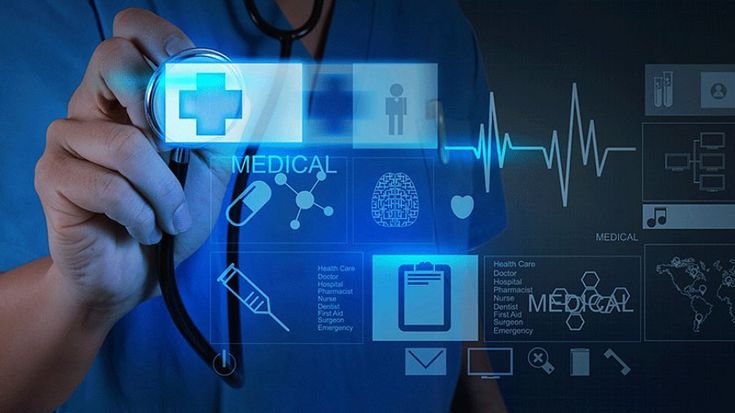

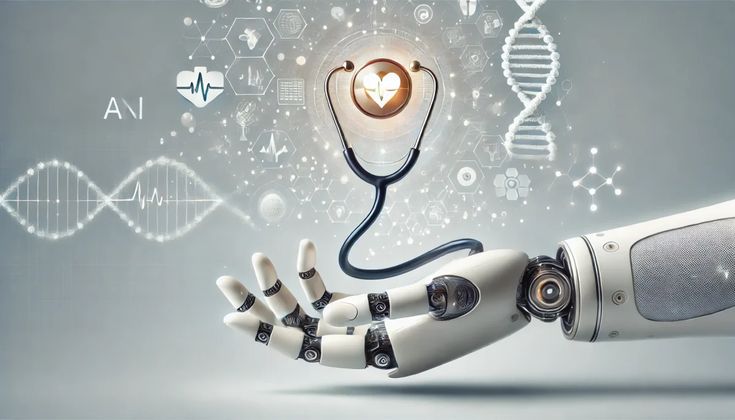
Artificial Intelligence is transforming many industries, and healthcare is one of the areas where its potential is particularly significant. From supporting medical professionals with data analysis to improving patient communication and enabling more personalized care, AI is changing how healthcare services can be delivered. As technology continues to develop, the future of healthcare powered by artificial intelligence is expected to become more connected, data-driven, efficient, and patient-focused.
AI does not replace the expertise of healthcare professionals. Instead, it can provide tools that help clinicians and healthcare organizations process information, identify patterns, automate routine activities, and make more informed decisions.
AI and Early Disease Detection
One of the most promising applications of AI in healthcare is the analysis of medical data. AI systems can process large amounts of information and identify patterns that may require further clinical attention.
Medical imaging is an important example. AI-based systems can assist in analyzing certain X-rays, scans, and other diagnostic images by highlighting areas that may need review. This can support healthcare professionals in identifying potential abnormalities more efficiently.
Early identification of health problems can create opportunities for timely evaluation and treatment.
Personalized Healthcare
Healthcare is increasingly moving toward personalized approaches rather than relying entirely on the same strategy for every patient. AI can analyze information such as medical history, test results, treatment responses, and other relevant data to support more individualized care planning.
In the future, AI may help healthcare teams identify which treatment approaches are more likely to benefit particular patients. This could support more targeted decision-making while reducing unnecessary interventions.
Personalized healthcare must always be guided by qualified professionals and appropriate clinical evidence.
AI-Powered Virtual Health Assistants
Virtual assistants and AI chatbots are becoming useful tools for healthcare communication. They can provide general information, answer frequently asked questions, assist with appointment-related requests, and guide patients toward appropriate healthcare resources.
These systems can help patients access information outside traditional working hours. They can also reduce the workload associated with repetitive administrative questions.
However, AI assistants should clearly communicate their limitations and should not be treated as substitutes for professional diagnosis or emergency medical care.
Predictive Healthcare Analytics
Healthcare organizations generate large amounts of data through electronic health records, diagnostic systems, patient monitoring devices, and administrative platforms. AI can analyze this information to identify trends and patterns.
Predictive analytics may help healthcare organizations anticipate patient needs, identify individuals who may require closer monitoring, and improve resource planning.
For hospitals and clinics, these capabilities could support better scheduling, staffing, inventory management, and operational decision-making.
Remote Patient Monitoring
Connected devices and wearable technologies are creating new opportunities for remote healthcare. Devices can collect information such as heart rate, activity levels, blood pressure, glucose measurements, or other health-related indicators, depending on the device and clinical context.
AI can help analyze streams of collected information and identify unusual patterns that may require attention. This can support remote monitoring and help healthcare teams stay informed about patients between appointments.
Remote monitoring can be particularly useful when combined with appropriate clinical oversight and reliable communication systems.
Improving Administrative Efficiency
Healthcare professionals often spend significant time on administrative responsibilities. AI can assist with tasks such as documentation support, appointment management, information organization, coding assistance, and workflow automation.
Reducing repetitive administrative work can allow healthcare teams to dedicate more time to patient-facing activities.
The goal is not simply to automate healthcare but to use technology where it can reduce unnecessary workload while maintaining quality and accountability.
Smarter Healthcare Software
AI is also becoming an important component of healthcare software. Modern healthcare platforms can combine artificial intelligence with electronic health records, customer relationship management systems, appointment platforms, communication tools, and analytics solutions.
AI-powered healthcare software can help organize information, automate selected workflows, support patient engagement, and provide useful insights to healthcare organizations.
As healthcare technology becomes more integrated, interoperability will become increasingly important so that different systems can exchange information securely and effectively.
Drug Discovery and Medical Research
AI has the potential to accelerate parts of medical research and drug development. Researchers can use computational models to analyze biological information, examine potential drug candidates, and identify relationships within large datasets.
Although AI cannot replace laboratory research and clinical trials, it can help researchers explore possibilities more efficiently.
This could contribute to faster development of new therapies and a deeper understanding of complex diseases over time.
Greater Focus on Preventive Care
Traditional healthcare often focuses on treating illness after symptoms appear. AI may support a stronger emphasis on prevention by helping identify risk patterns earlier.
By combining appropriate health information with predictive models, healthcare systems may be able to identify individuals who could benefit from screening, lifestyle support, monitoring, or further clinical evaluation.
Preventive strategies can help healthcare move toward maintaining health rather than responding only after disease develops.
Data Privacy and Responsible AI
The growth of AI in healthcare also creates important responsibilities. Healthcare information is highly sensitive, and organizations must protect patient data through appropriate security, privacy, access controls, and governance practices.
AI systems should also be evaluated for accuracy, reliability, bias, transparency, and safety. Human oversight remains essential, particularly when AI-generated information could influence clinical decisions.
Responsible implementation will be critical to building trust among patients and healthcare professionals.
The Future of AI in Healthcare
The future healthcare powered by artificial intelligence will likely involve greater collaboration between technology and healthcare professionals. AI may become integrated into clinical decision support, patient communication, medical research, remote monitoring, diagnostics, and administrative workflows.
As AI capabilities improve, healthcare organizations will need to focus not only on adopting new technology but also on training staff, protecting patient information, evaluating system performance, and establishing responsible usage policies.
Future Healthcare Powered by Artificial Intelligence offers significant opportunities to improve healthcare delivery, patient engagement, operational efficiency, research, and personalized care. AI can help healthcare professionals analyze complex information, automate repetitive tasks, monitor patients remotely, and identify useful patterns within large datasets.
The most effective future will not be healthcare without humans. Instead, it will be a healthcare environment where skilled professionals use intelligent technologies to make better-informed decisions and provide more efficient, personalized, and accessible care. With responsible implementation, strong data protection, and appropriate human oversight, AI can become an important part of the next generation of healthcare.