
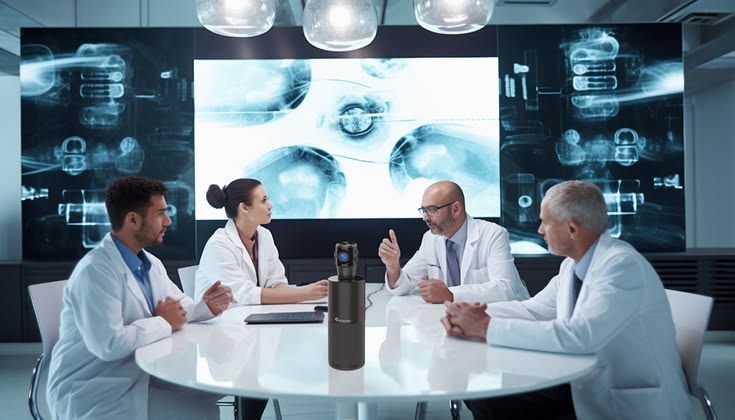
Artificial intelligence is changing the way healthcare organizations manage clinical, administrative, and patient engagement activities. Clinics are increasingly adopting digital technologies to reduce repetitive work, improve communication, organize information, and provide more efficient services. Understanding AI Healthcare Solutions Every Clinic Should Know can help healthcare organizations identify practical ways to use artificial intelligence while maintaining appropriate professional oversight.
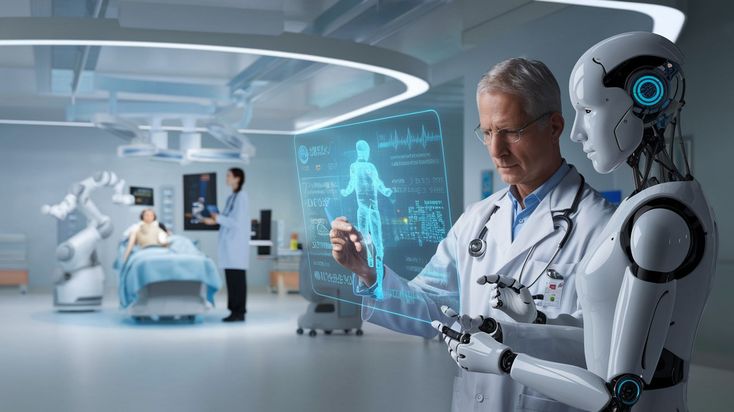
AI does not necessarily replace healthcare professionals. Instead, it can support routine workflows, analyze information, automate administrative activities, and provide decision-support capabilities. When implemented responsibly, AI can help clinics improve efficiency while allowing staff to dedicate more time to patients.
AI-Powered Appointment Scheduling
Appointment scheduling can involve significant administrative work. Staff may need to respond to calls, check availability, confirm bookings, manage cancellations, and send reminders.
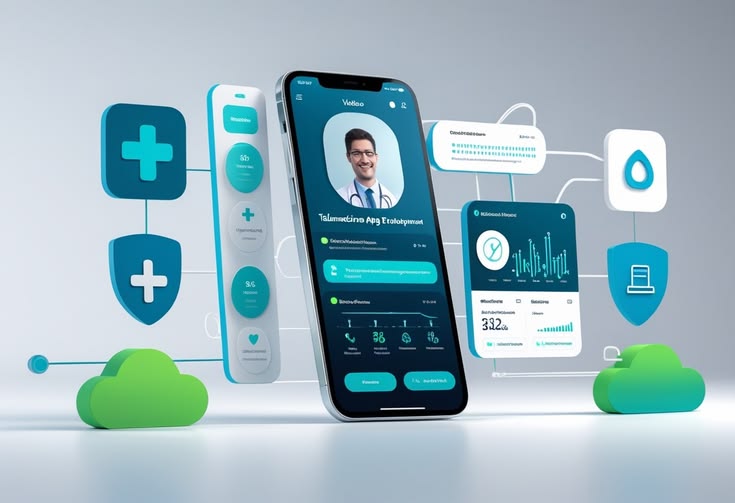
AI-powered scheduling solutions can automate many of these routine tasks. Patients may be able to book appointments through websites, mobile applications, chat interfaces, or virtual assistants. Automated reminders can also help patients remember upcoming appointments.
By reducing manual scheduling tasks, clinics can improve workflow efficiency and provide patients with more convenient access to services.
Intelligent Patient Communication
Effective communication is essential for maintaining a positive patient experience. Patients often have questions about appointments, services, preparation instructions, operating hours, and follow-up procedures.
AI-powered virtual assistants and conversational systems can respond to frequently asked questions and provide basic information around the clock. These systems can also direct more complex requests to appropriate staff members.
This combination of automation and human support can help clinics provide faster communication without removing the personal interaction required for sensitive healthcare matters.
AI Healthcare CRM Solutions
Healthcare CRM platforms can benefit from AI by organizing patient interactions and automating engagement workflows. An AI-enabled CRM can help clinics manage communication records, appointment information, follow-ups, and patient engagement activities.
AI can identify patterns in communication, prioritize tasks, suggest follow-up activities, and automate routine messages. This can help staff manage larger volumes of patient interactions more efficiently.
A healthcare CRM should also include appropriate security, access controls, and privacy measures to protect sensitive information.
Automated Documentation Support
Documentation is an essential part of healthcare but can consume considerable staff time. AI technologies using natural language processing can assist with organizing, summarizing, or structuring information for review.
Depending on the system, AI may help convert conversations or unstructured information into organized notes. Healthcare professionals should review AI-generated content carefully before using it in official clinical records.
The primary objective is to reduce documentation workload while maintaining accuracy and professional accountability.
AI-Powered Data Analytics
Clinics generate information from appointments, patient records, billing systems, laboratory results, communication platforms, and other sources.
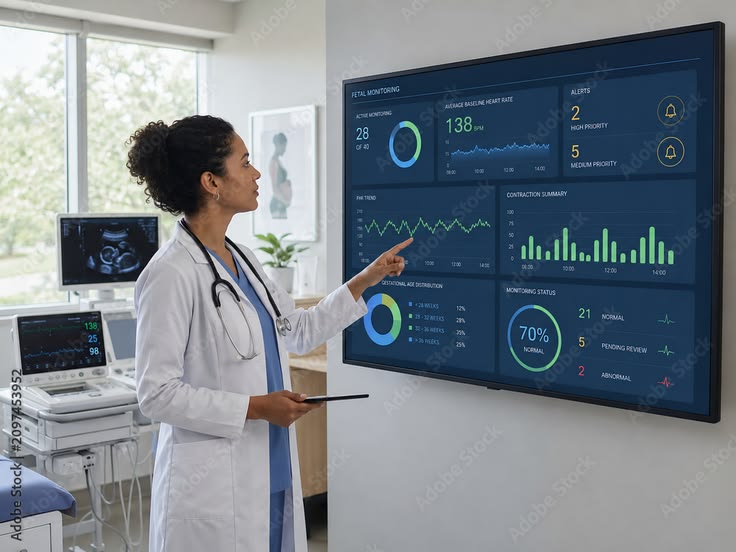
AI-powered analytics can process large datasets and identify trends or patterns. Clinics can use these insights to understand operational performance, patient engagement, appointment patterns, and resource utilization.
Data analytics can support better planning and help clinic management make informed operational decisions.
Predictive Analytics
Predictive analytics is another important AI healthcare solution. By analyzing historical and current data, AI systems can identify patterns that may help organizations anticipate certain operational or patient-related events.
For example, predictive tools may support appointment demand forecasting, patient follow-up prioritization, resource planning, or identifying patients who may require additional engagement.
Predictive insights should support professional decision-making rather than be treated as definitive clinical conclusions.
Automated Patient Follow-Up
Following up with patients can be difficult when staff members have numerous responsibilities. AI-powered automation can help clinics schedule reminders and communication based on predefined workflows.
Patients may receive reminders about appointments, follow-up visits, recommended actions, or administrative requirements. If a patient’s response indicates that staff attention is required, the system can route the task to the appropriate team.
This can help clinics maintain more consistent communication throughout the patient journey.
AI-Assisted Medical Imaging
Artificial intelligence is also being used in medical imaging applications. Certain AI systems can analyze medical images and identify patterns that may require further professional review.
These technologies can support healthcare professionals by highlighting potentially relevant areas and assisting with image analysis. However, AI-generated findings should be reviewed by qualified healthcare professionals and should not be treated as a substitute for appropriate clinical assessment.
AI Chatbots for Clinics
Healthcare chatbots can provide patients with quick access to general information. They can answer common questions, provide directions, explain basic service information, and assist with appointment-related processes.
Well-designed chatbot systems should clearly communicate their purpose and limitations. When a request involves clinical concerns, sensitive information, or urgent symptoms, the system should direct the patient toward appropriate professional assistance rather than attempting to replace clinical care.
Workflow Automation
Clinics manage numerous repetitive processes every day. AI-powered workflow automation can help route tasks, organize information, generate notifications, and reduce unnecessary manual steps.
Automated workflows can connect different departments and digital platforms. This can improve coordination between administrative teams, healthcare professionals, and patient communication channels.
AI-Powered Personalization
Patients increasingly expect convenient and relevant digital experiences. AI can analyze appropriate patient interaction data to support personalized communication and engagement.
For example, systems may help determine which communication is relevant to a particular patient based on their previous interactions or scheduled services. Personalization should always be implemented within applicable privacy and data protection requirements.
Security and Responsible AI Implementation
AI healthcare solutions require careful attention to privacy, security, accuracy, and governance. Clinics should evaluate how an AI system collects, processes, stores, and accesses information before implementation.
Important considerations include encryption, authentication, access controls, audit trails, data governance, human oversight, and compliance with applicable healthcare regulations.
Clinics should also monitor AI systems regularly to identify errors, biases, unexpected outputs, or workflow issues.
Choosing the Right AI Healthcare Solution
Not every clinic needs every AI technology. The right solution depends on the clinic’s size, specialty, patient volume, existing software, operational challenges, and digital goals.
Organizations should begin by identifying repetitive or inefficient processes and then evaluate whether AI can provide measurable improvements. Integration with existing healthcare systems is also important for avoiding unnecessary data silos and duplicated work.
Understanding AI Healthcare Solutions Every Clinic Should Know can help healthcare organizations explore practical opportunities for digital transformation. AI can support appointment scheduling, patient communication, CRM management, documentation, analytics, follow-up, workflow automation, and other operational activities.
The most effective approach is to use AI as a support technology while maintaining human oversight and strong privacy and security practices. With careful planning and responsible implementation, AI healthcare solutions can help clinics create more efficient workflows, improve patient engagement, and build a stronger foundation for modern healthcare delivery.