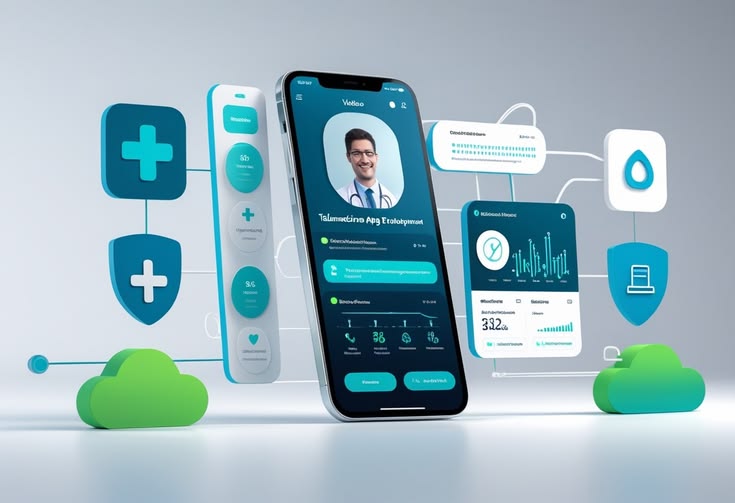

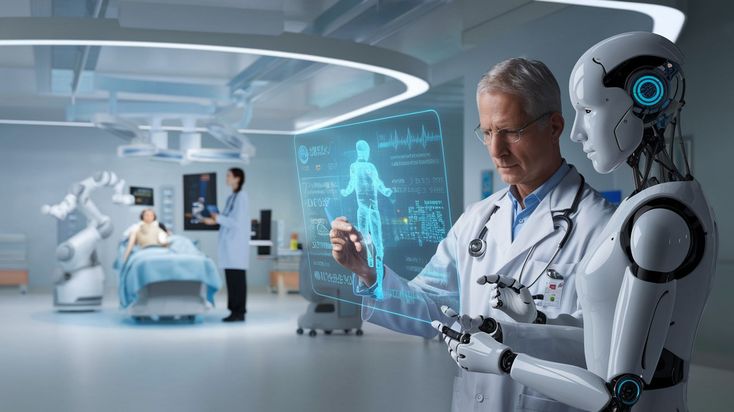
The healthcare industry is rapidly adopting digital technologies to improve patient care, streamline administrative processes, and support healthcare professionals. Among these technologies, artificial intelligence is becoming an important tool for automating repetitive tasks and improving the way healthcare organizations manage information and services. Healthcare Automation with Artificial Intelligence combines automation technologies with AI capabilities to make healthcare workflows more efficient, responsive, and data-driven.
From appointment scheduling and patient communication to documentation, data analysis, and operational management, AI-powered automation can support many areas of healthcare delivery. When implemented responsibly, these technologies can help organizations reduce administrative workloads while allowing healthcare professionals to focus more attention on patient needs.
Understanding Healthcare Automation With AI
Healthcare automation involves using software and digital systems to perform repetitive or rule-based tasks with minimal manual intervention. Artificial intelligence adds capabilities such as pattern recognition, natural language processing, prediction, and intelligent decision support.
Together, automation and AI can help healthcare organizations process large volumes of information and complete routine activities more efficiently. The technology can support administrative and operational workflows while keeping healthcare professionals involved in important decisions.
Automating Appointment Scheduling
Appointment management can require significant administrative effort. Staff may need to answer calls, check availability, confirm appointments, handle cancellations, and send reminders.
AI-powered automation can simplify these activities through online scheduling systems, virtual assistants, automated reminders, and intelligent communication tools. Patients can receive appointment information through digital channels while staff can spend less time managing routine scheduling requests.
Automated reminders can also help reduce missed appointments by providing patients with timely notifications.
Improving Patient Communication
Communication is an essential part of healthcare. Patients often need information about appointments, preparation instructions, follow-ups, prescriptions, or general services.
AI-powered communication systems can provide automated responses to common questions and deliver relevant information through websites, mobile applications, messaging platforms, or other digital channels.
These systems can operate outside traditional working hours, providing patients with access to basic information when staff may not be available. More complex or sensitive issues can be transferred to appropriate healthcare professionals.
Supporting Administrative Workflows
Healthcare organizations manage many repetitive administrative processes, including data entry, form processing, documentation, billing-related tasks, and record organization.
AI and automation can help reduce manual work by extracting information from documents, organizing data, identifying missing information, and routing tasks to the appropriate department.
Reducing repetitive administrative activities can improve operational efficiency and allow staff to focus on responsibilities that require human judgment and interaction.
Automating Healthcare Documentation
Documentation is an important part of healthcare operations but can consume considerable time. AI technologies that use natural language processing can assist with organizing or summarizing information from conversations and clinical documentation.
Depending on the system and applicable regulations, AI can help prepare structured notes or identify relevant information for review. Healthcare professionals should remain responsible for verifying generated information before it becomes part of an official record.
The goal is to reduce documentation burden while maintaining accuracy and appropriate oversight.
Enhancing Data Analysis
Healthcare organizations generate large amounts of information from electronic records, laboratory systems, medical devices, patient interactions, and administrative platforms.
AI can analyze large datasets and identify patterns that may be difficult to detect manually. Automated analytics can support operational reporting, patient population management, resource planning, and other data-driven activities.
AI-generated insights should be treated as decision-support information rather than an automatic replacement for qualified professional judgment.
Supporting Patient Follow-Up
Follow-up care can involve reminders, monitoring, communication, and coordination between patients and healthcare teams.
Automation can help organizations schedule follow-up messages, remind patients about recommended appointments, collect patient-reported information, and notify staff when certain responses require attention.
These workflows can help create a more organized patient journey and reduce the possibility of routine follow-up tasks being overlooked.
Improving Operational Efficiency
Healthcare organizations need to manage resources effectively. AI-powered automation can support tasks such as workforce scheduling, inventory monitoring, workflow routing, and operational reporting.
By analyzing historical and real-time information, AI systems may help organizations identify inefficiencies and improve resource allocation. This can contribute to smoother operations and better use of available staff and resources.
Strengthening Healthcare CRM Systems
Customer relationship management systems in healthcare can benefit significantly from AI automation. Healthcare CRM platforms can centralize patient interactions, communication records, appointment information, and follow-up activities.
AI can help identify communication patterns, prioritize tasks, automate routine messages, and provide relevant information to staff. This can create a more coordinated approach to patient engagement.
A healthcare CRM should be designed with appropriate privacy, security, access controls, and regulatory requirements in mind.
Improving Patient Experience
Healthcare automation can make services more convenient for patients. Online appointment booking, automated reminders, digital forms, virtual assistants, and personalized communication can reduce unnecessary waiting and administrative friction.
When routine processes become easier, patients may have a more seamless experience when interacting with healthcare organizations. However, automation should complement human care rather than remove meaningful human interaction where it is needed.
Addressing Security and Privacy
The use of AI in healthcare requires careful attention to data protection. Healthcare information can be highly sensitive, so organizations need appropriate safeguards when implementing automated technologies.
Important considerations include secure data storage, encryption, authentication, role-based access, audit trails, system monitoring, and compliance with applicable healthcare privacy regulations.
Organizations should also establish clear policies for how AI systems access, process, store, and use healthcare information.
Future of Healthcare Automation With AI
AI capabilities are expected to continue evolving, creating new opportunities for healthcare automation. Future systems may provide more advanced workflow intelligence, predictive analytics, personalized communication, intelligent documentation, and integration across healthcare platforms.
The most effective implementations will likely combine AI capabilities with human oversight, strong governance, secure infrastructure, and clearly defined workflows.
Healthcare Automation with Artificial Intelligence can transform healthcare workflows by reducing repetitive administrative work, improving communication, supporting data analysis, and creating more efficient patient journeys. AI can assist with scheduling, documentation, follow-ups, CRM processes, reporting, and operational management while healthcare professionals continue to oversee important decisions.
Successful implementation requires more than advanced technology. Healthcare organizations need secure systems, reliable data, appropriate human oversight, and responsible governance. When these elements work together, AI-powered automation can become a valuable part of modern healthcare operations and digital transformation.