

Healthcare organizations manage numerous clinical and administrative activities every day. From scheduling appointments and maintaining patient records to handling billing, communication, reporting, and follow-up care, these processes require coordination between multiple teams.
When these activities depend heavily on manual processes or disconnected systems, healthcare organizations may experience delays, duplicated work, communication gaps, and unnecessary administrative workloads. Modern healthcare solutions can help address these challenges by connecting workflows, automating routine tasks, and improving access to information.
Centralized Information Management
One of the main ways healthcare solutions improve efficiency is by centralizing important information. Digital platforms can organize patient details, appointment information, documents, communication records, and administrative data in a structured environment.
Authorized staff can access relevant information without repeatedly searching through paper files or multiple systems. This can reduce time spent locating information and help teams work more efficiently.
Streamlined Appointment Scheduling
Appointment management is a major part of daily healthcare operations. Manual scheduling can create conflicts, delays, and additional administrative work.
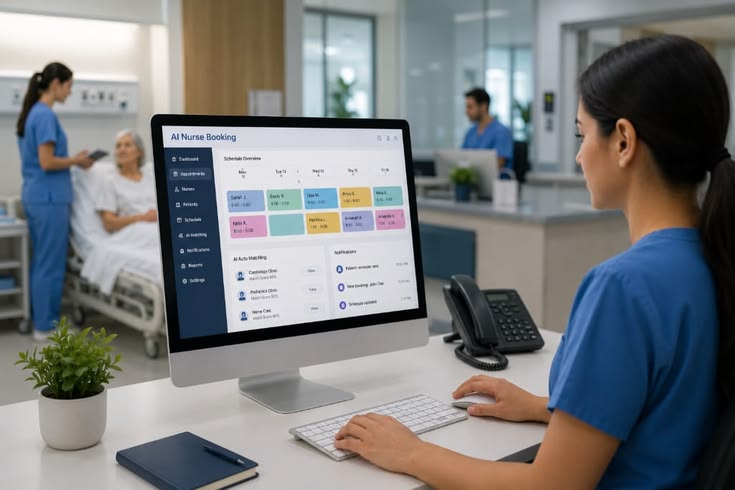
Healthcare solutions can provide digital calendars, appointment management tools, availability tracking, online booking, and rescheduling features. These capabilities can make it easier for staff to manage schedules and help patients access appointments more conveniently.
Automated Patient Reminders
Appointment reminders are another area where automation can improve efficiency. Healthcare platforms can automatically send reminders before scheduled appointments through supported communication channels.
Automated reminders reduce the need for staff to contact every patient manually. They can also help patients remember appointment details and provide important instructions when appropriate.
Digital Patient Registration
Traditional registration often involves paper forms and manual data entry. Digital registration tools can allow patients to submit information electronically.
This can reduce paperwork and minimize repetitive data entry for administrative staff. Digital forms can also help organize information before the patient’s appointment, depending on the workflow.
Improved Patient Communication
Effective communication supports both operational efficiency and patient satisfaction. Healthcare solutions can help organizations manage appointment notifications, follow-up messages, service updates, and other routine communications.
Centralized communication tools can help staff maintain more organized interactions and reduce the possibility of important messages being overlooked.
Automation of Repetitive Work
Many healthcare workflows include repetitive administrative activities. Automation can support tasks such as appointment confirmations, reminders, follow-up scheduling, notifications, data collection, and report generation.
By reducing repetitive manual work, automation can allow staff to focus on activities that require professional judgment and direct patient interaction.
Better Team Collaboration
Healthcare operations often involve several teams working together. Reception staff, clinicians, nurses, administrators, billing teams, and management may all need access to different types of information.
Connected healthcare solutions can improve coordination by giving authorized users access to relevant data and workflow updates.
Better collaboration can reduce unnecessary communication and help teams complete tasks more efficiently.
Efficient Billing Management
Billing processes can become complicated when they rely on manual calculations and disconnected records. Healthcare software can help organize invoices, payment information, billing records, and outstanding balances.
Automated processes can reduce repetitive administrative work and help staff maintain more accurate financial records.
The exact capabilities depend on the healthcare platform and its integration with payment and financial systems.
Faster Reporting and Analytics
Operational decisions require reliable information. Healthcare solutions can collect data from different workflows and present it through dashboards and reports.
Organizations can monitor areas such as appointment activity, patient engagement, service utilization, operational workloads, and financial performance.
These insights can help management identify inefficiencies and make better-informed decisions.
Improved Patient Follow-Up
Patient care may require follow-up communication after an appointment. Without an organized system, staff may need to manually track follow-up activities.
Healthcare solutions can support scheduled follow-up tasks, reminders, and communication workflows. This can help teams manage post-appointment activities more consistently.
Supporting Remote Healthcare
Healthcare solutions can also support telehealth and remote services. Depending on the platform, organizations may manage virtual appointments, digital communication, patient information, and follow-up processes through connected systems.
Remote healthcare capabilities can provide additional service options while maintaining organized workflows.
Integration Between Systems
Healthcare organizations frequently use multiple systems for clinical, administrative, financial, and communication purposes.
Integration can allow these systems to exchange relevant information and reduce duplicate data entry. For example, appointment information may be connected with patient communication and reporting tools.
A more connected technology environment can reduce workflow interruptions and improve information consistency.
Better Resource Management
Operational efficiency also depends on how effectively an organization uses its people, time, and facilities.
Digital scheduling tools and operational dashboards can help organizations understand workloads, appointment patterns, staff availability, and service demand.
These insights can support better planning and resource allocation.
Data Security and Access Control
Efficiency should not come at the expense of data protection. Healthcare solutions should include appropriate security measures for sensitive information.
Features such as user authentication, role-based access, encryption, secure storage, and activity monitoring may help organizations manage access and protect healthcare data.
Organizations should select technology that aligns with applicable privacy, security, and regulatory requirements.
Scalability for Growing Organizations
As healthcare organizations grow, operational complexity often increases. More patients, staff, services, and locations can create additional administrative requirements.
Scalable healthcare solutions can support growing workloads and help organizations expand their digital processes without relying entirely on manual operations.
This can provide a stronger foundation for long-term growth.
Enhancing the Patient Experience
Operational efficiency can have a direct effect on patients. Faster registration, convenient appointment scheduling, timely reminders, organized communication, and smoother administrative processes can make healthcare interactions easier.
When internal workflows operate efficiently, staff can dedicate more attention to patient-facing responsibilities.
Measuring Operational Efficiency
Healthcare organizations can use technology to monitor the effectiveness of their workflows. Useful performance indicators may include appointment completion rates, waiting times, patient communication activity, administrative workload, response times, and resource utilization.
Regular analysis can help identify bottlenecks and determine where additional automation or process improvements may be beneficial.