

Home healthcare organizations manage a unique combination of patient care, caregiver coordination, scheduling, communication, documentation, and administrative responsibilities. Unlike traditional healthcare settings, home healthcare teams often work across different locations while supporting patients in their homes.
A Home Healthcare CRM can help bring these activities into a more organized digital environment. By connecting patient information, communication, scheduling, follow-ups, and operational workflows, a CRM can help home healthcare providers improve coordination and deliver a more consistent patient experience.
Centralized Patient Information
Home healthcare teams may need to manage a wide range of patient information, including contact details, appointment history, care preferences, communication records, and service information.
A CRM can organize relevant information in one digital platform. Authorized team members can access the information they need without searching through multiple systems.
Centralized information can improve coordination and reduce repetitive administrative work.
Better Caregiver Coordination
Caregiver scheduling is an important part of home healthcare operations. Staff need to coordinate caregivers according to patient requirements, availability, location, and scheduled visits.
A CRM can help teams organize caregiver information and track assignments. This can make it easier to manage schedules and communicate changes.
Better coordination can reduce scheduling confusion and help ensure that patients receive the appropriate services.
Efficient Appointment Scheduling
Home healthcare providers often manage recurring visits and changing schedules. Manual scheduling can become complicated as the number of patients and caregivers increases.
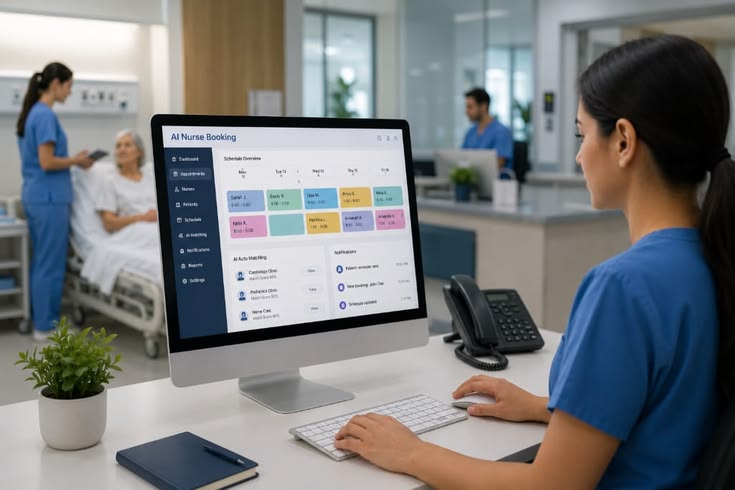
CRM solutions can support digital scheduling, appointment tracking, reminders, and schedule updates.
A centralized scheduling system can help administrative teams manage appointments more efficiently while keeping relevant staff informed.
Improved Patient Communication
Communication is essential for home healthcare because patients and families may need regular updates and support.
A CRM can help organize communications such as appointment confirmations, reminders, follow-up messages, service updates, and other routine notifications.
Centralized communication records can also help authorized staff understand previous interactions and provide more consistent support.
Automated Follow-Ups
Home healthcare often requires regular follow-up after visits or throughout an ongoing care plan. Manually tracking every follow-up can increase the workload for administrative teams.
A CRM can support automated reminders and follow-up workflows based on predefined schedules.
Automation can help reduce missed tasks while allowing staff to focus on patient-related responsibilities.
Better Family Engagement
Family members often play an important role in home healthcare. Keeping families informed about schedules, services, and relevant updates can contribute to a better overall experience.
With appropriate permissions and privacy controls, CRM systems can help organize communication with authorized family contacts.
This can make information sharing more structured and reduce unnecessary communication gaps.
Managing Leads and Referrals
Home healthcare organizations may receive new patient inquiries from various sources, including referrals, healthcare professionals, websites, advertising campaigns, and existing patients.
A CRM can help track inquiries from initial contact through assessment, onboarding, and service initiation.
Organized lead management can reduce the risk of losing potential patients and provide teams with better visibility into the intake process.
Streamlining Administrative Tasks
Home healthcare operations involve many repetitive activities, including data entry, appointment confirmations, communication, follow-ups, and reporting.
CRM automation can help reduce the amount of manual work required for routine processes.
By simplifying administrative activities, teams can dedicate more time to coordination and patient-facing responsibilities.
Tracking Patient Interactions
A CRM can provide a structured history of interactions with patients and authorized contacts. This may include calls, messages, appointments, inquiries, follow-ups, and service-related communication.
Having a centralized interaction history can help teams understand the patient’s journey and respond more effectively.
It can also reduce the need for staff to repeatedly ask for information that has already been recorded.
Supporting Remote Care Coordination
Home healthcare professionals frequently work outside a central facility. A cloud-based or mobile-friendly CRM can provide access to relevant information according to user permissions and organizational policies.
Remote accessibility can help coordinators and staff stay connected while managing services across different locations.
The technology should maintain strong security measures to protect sensitive healthcare information.
Reporting and Performance Insights
Home healthcare providers need to monitor operational performance. CRM reporting tools can help organizations analyze information such as inquiries, appointments, caregiver assignments, patient engagement, communication activity, and service trends.
These insights can help management identify workflow bottlenecks and make informed operational decisions.
Improving Patient Retention
Maintaining relationships with existing patients can be important for long-term growth. CRM systems can support retention through regular communication, follow-ups, reminders, feedback collection, and personalized interactions.
A consistent communication strategy can help home healthcare organizations remain connected with patients and families throughout their care journey.
Enhancing Operational Scalability
As a home healthcare organization grows, the number of patients, caregivers, appointments, and administrative tasks can increase significantly.
A CRM can provide a structured foundation for managing these expanding workflows. Automation, centralized information, and reporting can help organizations handle increased activity more efficiently.
Scalability should be considered when selecting a CRM so that the system can support future operational requirements.
Protecting Sensitive Information
Home healthcare CRM systems handle sensitive patient and personal information. Security should therefore be a major consideration when selecting and implementing a platform.
Features may include user authentication, role-based access, encryption, secure storage, backups, and activity monitoring.
Organizations should also ensure that their CRM practices align with applicable healthcare privacy and data protection requirements.
Integrating With Healthcare Systems
A CRM may need to work alongside other technologies used by a home healthcare organization. Depending on the platform, integrations may connect CRM workflows with scheduling systems, electronic health records, billing platforms, communication tools, or other applications.
Integration can reduce duplicate data entry and create a more connected operational environment.
Why Home Healthcare CRM Matters for Growth
A home healthcare CRM is not simply a contact management tool. It can become part of an organization’s broader operational infrastructure.
By organizing patient information, caregiver coordination, communication, scheduling, follow-ups, referrals, and reporting, a CRM can help home healthcare providers create more efficient workflows.
As patient expectations and operational requirements continue to evolve, connected digital systems can help organizations adapt while maintaining a strong focus on service quality.