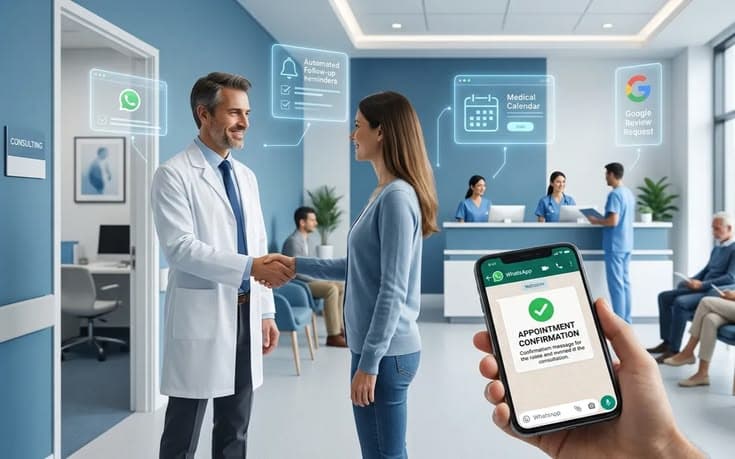
CRM for Hospital Patient Retention
Patient retention is an important factor in maintaining a hospital’s operational efficiency, patient satisfaction, and long-term growth. While attracting new


Patient retention is an important factor in maintaining a hospital's operational efficiency, patient satisfaction, and long-term growth. While attracting new patients remains valuable, encouraging existing patients to return for follow-up appointments, preventive screenings, and ongoing treatment can strengthen continuity of care. However, hospitals often face challenges such as missed appointments, delayed follow-ups, communication gaps, and fragmented patient information. A well-implemented CRM for hospital patient retention can help address these challenges by organizing patient interactions and supporting consistent communication throughout the healthcare journey.
Customer Relationship Management (CRM) software helps hospitals manage patient engagement, coordinate follow-ups, automate reminders, and monitor communication activities. When integrated appropriately with hospital information systems and electronic health records, a CRM solution can help healthcare teams deliver more coordinated experiences while improving administrative efficiency.
Understanding CRM for Hospital Patient Retention
CRM for hospital patient retention refers to using relationship management technology to maintain communication with patients and encourage appropriate continued engagement with healthcare services. It provides a structured way to manage interactions before, during, and after appointments.
A hospital CRM may store contact preferences, appointment histories, inquiry records, communication logs, and follow-up statuses. Authorized staff can use this information to understand where patients are in their care journey and identify administrative actions that may be required.
For example, a patient who needs a routine follow-up may receive an appointment reminder, while someone who has requested information about a service can receive a relevant response from the appropriate department. These processes help reduce communication gaps and make interactions more consistent.
CRM software does not replace clinical judgment or medical record systems. Instead, it supports the administrative and relationship-management activities that help patients navigate healthcare services.
Why Patient Retention Matters for Hospitals
Patient retention involves more than encouraging repeat visits. It includes helping patients access appropriate services, understand appointment arrangements, and maintain communication with healthcare providers when needed.
Consistent patient engagement can support continuity of care, particularly when individuals require routine monitoring, rehabilitation, chronic disease management, or scheduled follow-up consultations. Clear communication can also reduce uncertainty about appointment times, preparation instructions, and administrative procedures.
From an operational perspective, stronger retention processes may help hospitals reduce missed appointments, improve scheduling efficiency, and use available resources more effectively. Patients who have positive experiences may also be more willing to recommend a hospital to family members or other people seeking care.
Retention strategies should always prioritize patient needs, informed choices, and clinical appropriateness rather than unnecessary visits or excessive promotional communication.
Automating Appointment Reminders and Follow-Ups
Missed appointments can disrupt schedules and delay access to care. Manual reminder processes may become difficult to manage when hospitals handle large patient volumes across multiple departments.
A hospital CRM can automate appointment reminders through approved communication channels such as SMS, email, or messaging platforms. Depending on the system, reminders can include appointment dates, timings, confirmation options, and instructions for rescheduling.
The system can also help staff track follow-up tasks and identify appointments that require additional administrative attention. For example, if a patient does not confirm an appointment, the appropriate team may receive a notification to review the booking.
Automation reduces repetitive work and supports timely communication. However, reminders should be configured according to patient preferences, privacy requirements, and the hospital's operational policies.
Personalizing Patient Communication
Patients have different healthcare needs, communication preferences, and service requirements. Generic messages may not always provide the information individuals need at the right time.
CRM software can help hospitals organize communication based on relevant administrative information, such as appointment type, department, preferred language, and consent status. This allows teams to provide more useful reminders and service updates.
For example, a patient scheduled for a diagnostic appointment may need approved preparation instructions, while someone attending a routine consultation may need a simple appointment confirmation. A patient who requests information about a hospital service can receive relevant details without being included in unrelated campaigns.
Personalization should be carefully managed. Hospitals must restrict access to sensitive information, avoid unnecessary disclosures through notifications, and ensure that communication is appropriate for the recipient.
Improving Patient Feedback and Satisfaction
Understanding patient experiences is essential for improving retention. Long waiting times, difficult booking processes, unclear instructions, and delayed responses can negatively affect satisfaction.
A CRM system can help hospitals collect feedback after appointments and organize complaints, suggestions, and service requests. Staff can assign feedback to the relevant department, track its status, and monitor whether a response has been provided.
Analyzing recurring concerns may reveal opportunities to improve scheduling, reception processes, communication, or patient support services.
Hospitals can also use feedback trends to evaluate whether service improvements are having the intended effect. Feedback management should include appropriate safeguards for sensitive information and clear procedures for escalating clinical concerns or urgent complaints to qualified staff.
Integrating CRM with Hospital Management Systems
A CRM system becomes more useful when it works effectively with other hospital technologies. Integrations may connect CRM software with appointment scheduling systems, hospital information systems, electronic health records, billing platforms, and communication tools.
For example, an approved integration with a scheduling system can help keep appointment information consistent across platforms. Connections with authorized patient administration systems may reduce duplicate data entry and help staff access relevant operational information.
Integration design should define which data can be shared, who can access it, and how changes are synchronized. Hospitals should also consider interoperability, system reliability, audit trails, and data ownership before implementing integrations.
Clinical records should remain managed through appropriate healthcare information systems, with access governed by professional responsibilities and applicable regulations.
Using Analytics to Strengthen Patient Retention
CRM analytics can help hospitals understand patient engagement patterns and identify areas where communication processes need improvement.
Useful operational indicators may include appointment confirmation rates, missed appointment rates, follow-up completion, patient feedback trends, response times, and communication engagement. These measures can help administrators evaluate the effectiveness of retention initiatives.
For example, a department experiencing a high rate of missed appointments may benefit from reviewing reminder timing, booking procedures, or rescheduling options. If patient feedback repeatedly identifies difficulties with registration, the hospital can investigate improvements to its administrative workflow.
Analytics should be interpreted carefully because patient behavior can be influenced by clinical circumstances, access barriers, personal preferences, and other factors. Retention metrics should support service improvement rather than encourage inappropriate clinical decisions.
Protecting Patient Data and Privacy
Patient trust depends on responsible information management. Since healthcare CRM platforms may process personal details and sensitive information, hospitals must implement appropriate privacy and security controls.
Important measures include role-based access, secure authentication, encryption, audit logging, data minimization, and regular security assessments. Hospitals should establish clear rules for collecting, storing, sharing, and deleting information.
Communication workflows must respect patient consent and preferences, while integrations should follow applicable privacy and data-protection requirements. Staff training is also essential to reduce accidental disclosures and inappropriate access.
A CRM implementation should be reviewed by the hospital's relevant IT, security, and compliance teams before sensitive data is processed.
Best Practices for Implementing a Hospital CRM
Successful implementation begins with identifying the hospital's main patient engagement challenges. Administrators should define measurable objectives, map existing workflows, and determine which departments will use the system.
The selected CRM should offer suitable automation, reporting, integration capabilities, security controls, and user-friendly interfaces. Staff training and clear responsibilities help ensure that the system is used consistently.
Hospitals should begin with practical workflows, such as appointment reminders and feedback management, before expanding into more complex automation. Regular reviews can reveal technical issues, workflow gaps, and opportunities to improve patient communication.
The effectiveness of the system should be measured through operational outcomes and patient experience rather than software adoption alone.
CRM for hospital patient retention helps healthcare organizations build more consistent patient relationships through organized communication, appointment reminders, follow-up management, feedback tracking, and operational analytics.
When implemented with appropriate integrations, staff training, and strong privacy safeguards, a hospital CRM can reduce administrative gaps and support a smoother patient journey. The most effective strategy combines suitable technology with responsive staff, accessible services, and patient-centered communication.
By focusing on continuity, trust, and service quality, hospitals can create a more supportive healthcare experience while improving the efficiency of their patient engagement processes.
The Doctorna editorial desk writes about healthcare operations, patient experience and the systems clinics use to connect them.