

Healthcare organizations are operating in an increasingly digital environment where patients expect convenient services, efficient communication, and easy access to healthcare information. At the same time, clinics and healthcare businesses need to manage appointments, patient records, communication, billing, reporting, and daily workflows efficiently.
This is where healthcare technology platforms can play an important role. By connecting different operational and patient-facing functions through digital systems, healthcare organizations can improve efficiency, support better decision-making, and create a stronger foundation for sustainable growth.
Centralizing Healthcare Operations
As healthcare organizations grow, managing information across separate systems can become increasingly difficult. Different departments may use different tools for appointments, patient communication, records, billing, and reporting.
A connected healthcare technology platform can bring important workflows together. Centralized information can help authorized teams access relevant data more efficiently and reduce unnecessary duplication.
This creates a more organized operational environment that can support growth.
Improving Patient Access
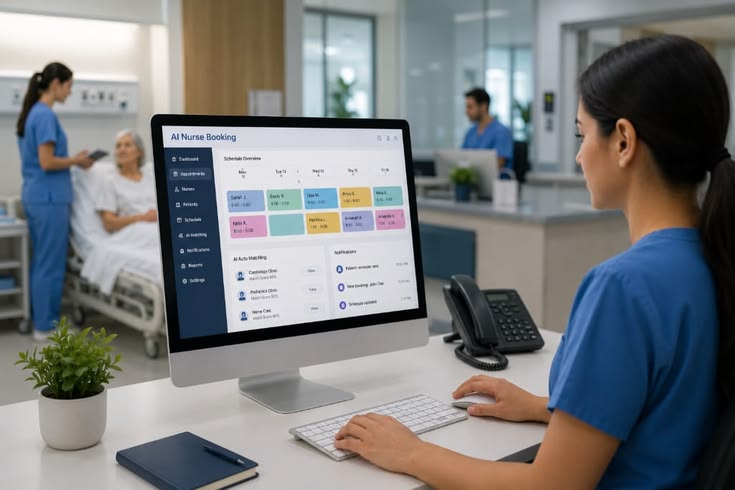
Modern patients increasingly expect healthcare services to be convenient and accessible. Digital platforms can support online appointment booking, automated reminders, digital forms, patient portals, and other services that reduce administrative barriers.
When patients can complete routine tasks digitally, healthcare organizations can provide a more convenient experience while reducing pressure on front-desk teams.
Supporting Better Patient Communication
Communication is an important part of the patient journey. Healthcare technology platforms can help organizations manage appointment notifications, follow-up messages, reminders, and other communications.
Automated communication can ensure that routine messages are delivered consistently while allowing staff to focus on interactions that require personal attention.
A more organized communication process can also help strengthen the relationship between patients and healthcare providers.
Automating Repetitive Tasks
Administrative work can consume a significant amount of staff time. Repetitive activities such as appointment confirmations, reminders, data entry, follow-up notifications, and report preparation can often be supported through automation.
Automation does not replace the need for healthcare professionals. Instead, it can reduce repetitive workloads and allow teams to dedicate more time to patient-facing and higher-value activities.
Enabling Data-Driven Decisions
Healthcare organizations generate large amounts of operational and patient-related information. Technology platforms can organize this information into dashboards and reports that help management understand business performance.
Metrics related to appointment volumes, patient engagement, operational activity, revenue, and service utilization can provide useful insights.
Data-driven decision-making can help organizations identify areas for improvement and make more informed growth strategies.
Supporting Scalability
A technology platform can provide a foundation for organizations that plan to expand. As a clinic adds more patients, employees, services, or locations, manual processes can become increasingly difficult to manage.
Scalable digital systems can support larger workloads and additional workflows without requiring every process to be managed manually.
The ability to expand technology alongside the organization can make long-term growth more manageable.
Connecting Different Departments
Healthcare organizations often involve multiple teams with different responsibilities. Reception, clinical staff, administration, billing, marketing, and management may all need access to relevant information.
Integrated technology can improve coordination between these teams. When authorized users have access to appropriate information, communication gaps and duplicated work can be reduced.
Better coordination can contribute to more efficient daily operations.
Strengthening Patient Retention
Growth is not only about attracting new patients. Maintaining strong relationships with existing patients is equally important.
Technology can support patient retention through appointment reminders, follow-up workflows, personalized communication, feedback collection, and convenient digital services.
A consistent digital experience can help organizations remain connected with patients beyond individual appointments.
Supporting Telehealth and Remote Services
Healthcare technology platforms can also support virtual healthcare services. Depending on the system, organizations may manage online consultations, digital appointments, communication, patient information, and follow-up activities through connected workflows.
Remote services can expand access to healthcare and provide organizations with additional ways to serve patients.
Improving Operational Efficiency
Growth can become challenging when increased demand is matched by increasing administrative workload. Technology can help organizations handle more activities without relying entirely on manual processes.
Automated workflows, centralized information, digital scheduling, and integrated communication can reduce operational friction.
Improved efficiency can allow healthcare organizations to use existing resources more effectively as demand increases.
Enhancing Security and Data Management
Healthcare organizations manage sensitive information that requires appropriate protection. Modern healthcare technology platforms can provide features such as role-based access, authentication, encryption, secure storage, and activity monitoring, depending on the system.
Strong data management practices can help organizations protect information while ensuring authorized users can access the data they need.
Security and privacy requirements should be considered carefully when selecting and implementing healthcare technology.
Enabling Integration
Healthcare organizations often rely on multiple digital systems. Integration allows different technologies to exchange information and support connected workflows.
For example, a healthcare platform may integrate appointment management with patient communication, billing, reporting, or electronic medical record systems.
Reducing the need to move information manually between systems can save time and improve data consistency.
Supporting Personalized Healthcare Experiences
Technology can help organizations deliver more personalized digital experiences. Patient information and interaction history can be used, where appropriate and permitted, to provide relevant reminders, follow-up communication, service information, and other experiences.
Personalization can make digital healthcare interactions more useful while helping organizations maintain stronger patient relationships.
Helping Healthcare Businesses Adapt
Healthcare technology is constantly evolving. Organizations that establish a strong digital foundation can adapt more easily to new technologies, changing patient expectations, and emerging healthcare delivery models.
Cloud-based systems, artificial intelligence, automation, analytics, mobile applications, and connected devices are examples of technologies that can influence future healthcare operations.
A flexible technology strategy can help organizations respond to these developments without rebuilding every system from the beginning.
Choosing the Right Technology Platform
Not every healthcare organization has the same requirements. The right platform should match the organization’s size, services, workflows, patient needs, security requirements, and future growth plans.
Important considerations can include usability, scalability, integration capabilities, automation features, reporting, security, mobile accessibility, and technical support.
Organizations should focus on solutions that solve genuine operational challenges rather than adopting technology simply because it is new.