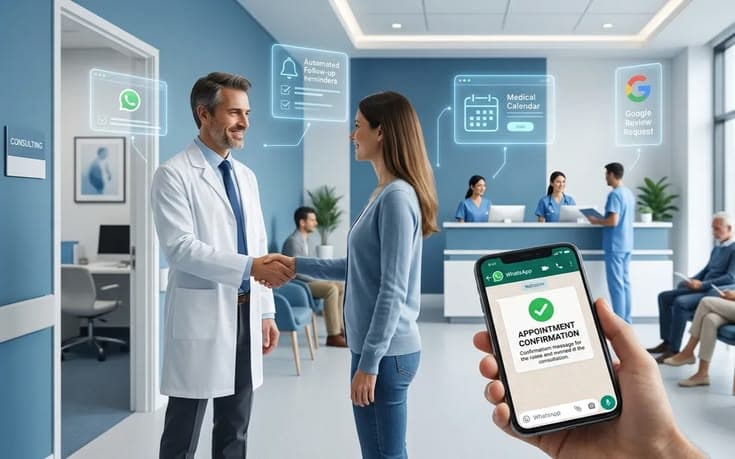
How CRM Improves Healthcare Operations
Healthcare organizations are under increasing pressure to provide exceptional patient care while managing growing administrative demands and operational complexities. From


Healthcare organizations are under increasing pressure to provide exceptional patient care while managing growing administrative demands and operational complexities. From appointment scheduling and patient communication to care coordination and data management, healthcare providers require efficient systems to streamline daily operations. This is where Customer Relationship Management (CRM) software plays a vital role. Understanding How CRM Improves Healthcare Operations helps hospitals, clinics, and medical practices enhance patient experiences, increase efficiency, and optimize healthcare delivery.
Unlike traditional customer management tools, healthcare CRM systems are designed specifically to strengthen patient relationships, automate administrative processes, and improve communication across the entire patient journey.
What Is a Healthcare CRM?
A Healthcare Customer Relationship Management (CRM) system is software that helps healthcare providers manage patient interactions, organize patient information, automate communication, and improve operational efficiency. It serves as a centralized platform that connects patients, healthcare professionals, and administrative staff.
Healthcare CRM solutions often integrate with Electronic Health Records (EHR), appointment scheduling systems, billing platforms, and telemedicine services to create a seamless healthcare ecosystem.
Streamlined Patient Management
One of the biggest advantages of a healthcare CRM is centralized patient management. Instead of maintaining patient information across multiple systems, a CRM stores essential data in one secure location.
Healthcare providers can easily access:
- Patient demographics
- Appointment history
- Communication records
- Treatment plans
- Referral information
- Insurance details
- Follow-up schedules
This centralized approach reduces administrative errors, improves collaboration, and ensures that healthcare professionals have access to accurate patient information when needed.
Automated Appointment Scheduling
Manual appointment scheduling often leads to delays, double bookings, and missed appointments. Healthcare CRM systems automate scheduling processes, making appointment management faster and more accurate.
Key scheduling features include:
- Online appointment booking
- Automated confirmations
- Appointment reminders
- Waitlist management
- Rescheduling support
- Calendar synchronization
Automated reminders help reduce no-show rates while improving patient convenience and clinic efficiency.
Enhanced Patient Communication
Effective communication is essential for building strong patient relationships. Healthcare CRM platforms allow providers to communicate with patients through multiple channels while delivering personalized information.
Communication features include:
- SMS reminders
- Email notifications
- Follow-up messages
- Health education campaigns
- Preventive care alerts
- Patient satisfaction surveys
Timely communication improves patient engagement, encourages treatment adherence, and strengthens trust between patients and healthcare providers.
Reduced Administrative Workload
Healthcare professionals often spend significant time performing repetitive administrative tasks. CRM automation reduces manual workloads, allowing staff to focus more on patient care.
Tasks that can be automated include:
- Appointment reminders
- Patient registration
- Document collection
- Follow-up scheduling
- Referral management
- Billing notifications
Automation minimizes human error while improving operational efficiency across the organization.
Better Care Coordination
Patients frequently receive treatment from multiple departments and specialists. Healthcare CRM systems improve coordination by providing a shared view of patient interactions and care activities.
Benefits include:
- Improved collaboration between care teams
- Faster information sharing
- Better referral tracking
- Coordinated follow-up care
- Reduced communication gaps
Enhanced coordination supports better clinical outcomes and a smoother patient experience.
Data-Driven Decision Making
Healthcare CRM systems generate valuable reports and analytics that help organizations monitor operational performance and identify opportunities for improvement.
Useful metrics include:
- Appointment attendance
- Patient retention
- Communication effectiveness
- Patient satisfaction
- Referral sources
- Staff productivity
- Service utilization
These insights support informed decision-making and continuous operational improvement.
Personalized Patient Experiences
Modern patients expect personalized healthcare experiences similar to those provided by other service industries. Healthcare CRM systems enable providers to tailor communication and services based on patient preferences and medical history.
Examples include:
- Personalized appointment reminders
- Preventive care recommendations
- Wellness campaign invitations
- Birthday greetings
- Chronic disease follow-up plans
Personalization strengthens patient relationships and improves long-term engagement.
Improved Compliance and Data Security
Healthcare organizations handle sensitive patient information that must be protected according to regulatory requirements.
Healthcare CRM platforms support compliance through:
- Secure data encryption
- Role-based access controls
- Audit trails
- Consent management
- Secure patient communication
- Regular security updates
Strong security measures protect patient privacy while supporting compliance with healthcare regulations.
Integration with Healthcare Systems
Healthcare CRM solutions integrate with existing healthcare technologies to eliminate data silos and improve workflow efficiency.
Common integrations include:
- Electronic Health Records (EHR)
- Electronic Medical Records (EMR)
- Hospital Information Systems (HIS)
- Billing software
- Laboratory systems
- Telemedicine platforms
- Patient portals
Integration enables seamless information sharing while reducing duplicate data entry.
Increased Operational Efficiency
By combining automation, centralized information, and intelligent workflows, healthcare CRM significantly improves day-to-day operations.
Organizations benefit from:
- Faster patient processing
- Reduced paperwork
- Improved scheduling
- Better communication
- Efficient staff collaboration
- Lower operational costs
- Higher productivity
These improvements allow healthcare providers to serve more patients while maintaining high standards of care.
Better Patient Retention
Satisfied patients are more likely to return for future care and recommend healthcare providers to others. CRM systems help build lasting relationships through consistent communication and proactive engagement.
Patient retention strategies supported by CRM include:
- Follow-up care reminders
- Preventive screening notifications
- Loyalty programs
- Educational content
- Feedback collection
- Personalized health updates
Long-term patient relationships contribute to sustainable organizational growth.
The Doctorna editorial desk writes about healthcare operations, patient experience and the systems clinics use to connect them.