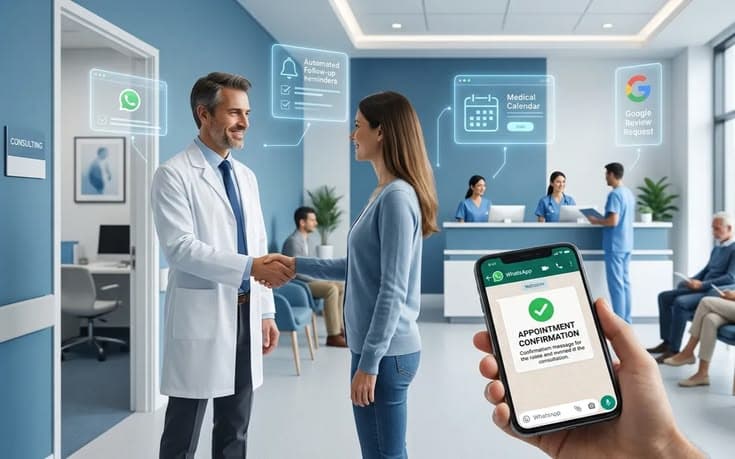
How Healthcare CRM Improves Patient Relationships
Building strong patient relationships is an important part of modern healthcare. Patients expect healthcare organizations to provide convenient communication, timely


Building strong patient relationships is an important part of modern healthcare. Patients expect healthcare organizations to provide convenient communication, timely information, personalized interactions, and consistent support throughout their healthcare journey. Managing these interactions manually can become difficult as the number of patients and communication channels increases.
A healthcare Customer Relationship Management (CRM) system can help healthcare organizations organize patient information, coordinate communication, automate routine follow-ups, and provide a more connected patient experience.
What Is Healthcare CRM?
Healthcare CRM is a technology platform designed to help healthcare organizations manage interactions and relationships with patients. It can bring together information from different communication and administrative processes into a centralized system.
Depending on the platform, a healthcare CRM may support patient communication, appointment management, lead management, follow-ups, reminders, feedback collection, marketing campaigns, and integration with other healthcare systems.
The purpose is not simply to store patient information but to help healthcare teams manage interactions more efficiently and consistently.
1. Centralizes Patient Information
One of the main ways healthcare CRM improves patient relationships is by organizing relevant patient information in a centralized environment.
Authorized staff can access information such as contact details, appointment history, communication records, inquiries, and follow-up activities according to their permissions.
Having organized information can help staff understand previous interactions and provide more consistent communication.
2. Enables Personalized Communication
Patients have different needs, preferences, and healthcare journeys. A CRM can help healthcare organizations segment patient information and create more relevant communication workflows.
For example, patients can receive communication related to appointments, follow-ups, preventive care, or other services relevant to their interactions with the organization.
Personalized communication can make patients feel better supported while reducing irrelevant messages.
3. Improves Appointment Management
Appointments are a major part of patient interaction with healthcare organizations. A CRM can help staff manage appointment-related communication and follow-ups.
Automated reminders can be sent through channels such as SMS, email, or messaging platforms. Patients can receive information about upcoming appointments, changes, or other relevant instructions.
Better appointment communication can reduce missed appointments and make scheduling interactions more convenient.
4. Automates Patient Follow-Ups
Follow-up communication is important after consultations, procedures, or other healthcare interactions. However, manually tracking every follow-up can be challenging for busy healthcare teams.
Healthcare CRM platforms can create reminders and automated workflows based on predefined conditions. Staff can identify patients who require follow-up and manage these activities through a centralized system.
Automation can help organizations maintain communication without relying entirely on manual reminders.
5. Supports Omnichannel Communication
Patients may communicate with healthcare organizations through phone calls, email, websites, mobile applications, SMS, and messaging platforms.
A healthcare CRM can help organize interactions across multiple channels. Instead of managing every communication channel independently, teams can use a connected system to track relevant interactions.
This can create a more consistent communication experience and reduce the chances of important inquiries being overlooked.
6. Helps Respond to Patient Inquiries
Patients often contact healthcare organizations with questions about appointments, services, availability, procedures, and other administrative matters.
CRM systems can help teams record and track these inquiries. Staff can see the status of requests and identify which interactions require a response.
This structured approach can improve response management and help prevent inquiries from being forgotten.
7. Improves Patient Engagement
Patient relationships often extend beyond individual appointments. Healthcare organizations can use CRM platforms to maintain appropriate communication throughout the patient journey.
Depending on the organization and applicable privacy requirements, CRM workflows can support educational messages, appointment reminders, preventive-care communication, feedback requests, and other engagement activities.
Consistent communication can help patients remain connected with their healthcare provider.
8. Supports Feedback Collection
Understanding patient experiences can help healthcare organizations identify areas for improvement. CRM systems can support surveys, feedback forms, and follow-up communication.
Organizations can organize feedback and identify recurring themes in patient interactions. Management teams can then use these insights when reviewing services and communication processes.
9. Helps Retain Patient Relationships
Maintaining an existing patient relationship requires ongoing communication and service. CRM systems can help organizations identify patients who have not returned for an expected follow-up or who may require additional communication.
Automated workflows can help teams manage appropriate reminders and engagement activities.
Patient retention should always be approached with respect for patient choice, privacy, and applicable healthcare communication requirements.
10. Provides Useful Analytics
Healthcare CRM platforms can provide reports and dashboards related to patient communication and engagement.
Organizations may be able to monitor metrics such as appointment inquiries, communication response rates, follow-up activity, campaign performance, and patient feedback.
These insights can help management understand how communication processes are performing and where operational improvements may be needed.
11. Connects With Other Healthcare Systems
A healthcare CRM can become more useful when integrated with other digital healthcare systems. Depending on the organization, integrations may include Electronic Health Records (EHRs), Electronic Medical Records (EMRs), Hospital Information Systems (HIS), appointment systems, telemedicine platforms, billing systems, and communication tools.
Integration can reduce duplicate data entry and create more connected workflows. However, integrations should be designed with appropriate security, access controls, and privacy requirements.
12. Improves Staff Coordination
Patient relationships are often managed by multiple teams, including reception staff, call-center employees, marketing teams, care coordinators, and administrators.
A shared CRM can help authorized team members understand the status of patient interactions and assigned follow-up activities. This can reduce communication gaps between departments and support more coordinated service.
Data Privacy and Security
Because healthcare CRM systems can handle sensitive information, security and privacy should be fundamental considerations. Organizations should use appropriate access controls, authentication, encryption, audit mechanisms, backups, and data-management policies.
CRM workflows should also comply with applicable healthcare privacy and data-protection regulations in the organization's jurisdiction.
Healthcare CRM improves patient relationships by helping healthcare organizations organize patient interactions, personalize communication, manage appointments, automate follow-ups, collect feedback, and coordinate activities across teams.
Rather than replacing human interaction, a healthcare CRM can give staff better tools for managing communication and maintaining continuity. When integrated properly with other healthcare systems and implemented with strong privacy and security practices, CRM technology can support a more organized, responsive, and patient-focused healthcare experience.
The Doctorna editorial desk writes about healthcare operations, patient experience and the systems clinics use to connect them.