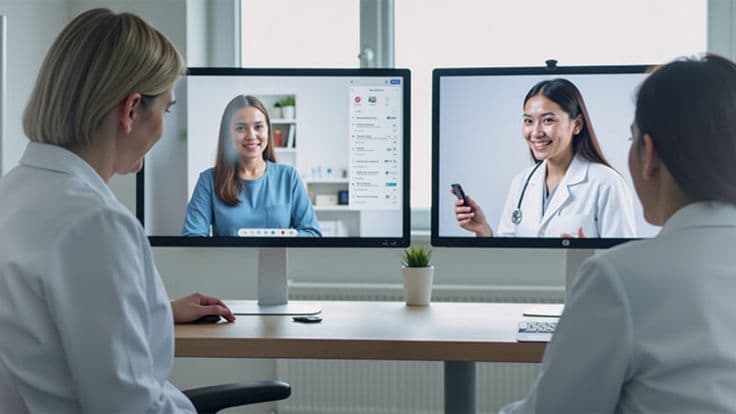
Patient Loyalty and Digital Communication
Building long-term relationships with patients has become an important priority for modern healthcare organizations. Patients have more options for choosing


Building long-term relationships with patients has become an important priority for modern healthcare organizations. Patients have more options for choosing healthcare providers, and their expectations extend beyond the quality of clinical care. They also value convenient communication, timely information, easy appointment management, and consistent service.
Digital communication can help healthcare providers maintain meaningful relationships with patients throughout their healthcare journey. When used responsibly, communication through websites, email, messaging platforms, mobile applications, and other digital channels can improve engagement and contribute to stronger patient loyalty.
Understanding Patient Loyalty
Patient loyalty refers to a patient's willingness to continue using a healthcare provider and recommend the organization to others. Clinical quality remains an important factor, but the overall patient experience can also influence loyalty.
Patients may remember how easy it was to book an appointment, whether they received useful reminders, how quickly their questions were addressed, and whether communication continued after a visit.
A positive experience across multiple touchpoints can encourage patients to maintain a long-term relationship with a healthcare organization.
The Role of Digital Communication
Digital communication provides healthcare providers with convenient ways to stay connected with patients. Instead of relying entirely on phone calls or in-person interactions, organizations can use digital channels for appropriate administrative and informational communication.
Appointment confirmations, reminders, preparation instructions, follow-up messages, educational resources, and service updates can be delivered through suitable digital channels.
The objective should be to make communication more useful and convenient without overwhelming patients with unnecessary messages.
Providing Convenient Appointment Communication
Appointment management is one of the areas where digital communication can have an immediate impact on patient experience. Patients can receive confirmation messages, reminders, rescheduling information, and other relevant updates through their preferred communication channels where available.
Online appointment requests can also reduce the effort required to contact a healthcare facility. When the process is simple and responsive, patients may find it easier to continue using the same provider.
Personalized Patient Engagement
Generic communication may not always be relevant to every patient. Digital systems can help healthcare organizations organize communication according to patient preferences, interactions, and appropriate service requirements.
For example, a patient who regularly attends preventive appointments may receive relevant reminders, while another patient may receive information related to an upcoming service.
Personalization should always be handled carefully, particularly when sensitive health information is involved. Communication should follow applicable privacy and consent requirements.
Post-Visit Communication
The relationship with a patient does not necessarily end when an appointment is completed. Appropriate post-visit communication can help patients understand the next steps in their care journey.
Depending on the situation, healthcare providers may send appointment follow-ups, general care instructions, feedback requests, or reminders for future appointments.
These interactions can demonstrate that the organization remains engaged with the patient's experience beyond the consultation itself.
Using Patient Portals and Mobile Platforms
Patient portals and mobile applications can provide patients with convenient access to selected services and information. Depending on the system, patients may be able to request appointments, view permitted information, receive notifications, communicate with healthcare teams, or manage administrative details.
A well-designed digital platform can reduce friction and give patients greater convenience. However, the interface should remain simple, secure, and accessible to users with different levels of digital experience.
Building Trust Through Consistent Communication
Trust is particularly important in healthcare. Inconsistent or confusing communication can negatively affect the patient experience, while clear and reliable communication can support confidence in the organization.
Healthcare providers should ensure that digital messages are accurate, understandable, and appropriately timed. Patients should also know how to contact the organization when they need additional assistance.
Digital communication should complement human interaction rather than completely replace it.
Gathering Patient Feedback
Digital communication can make it easier for healthcare organizations to collect patient feedback. Short surveys or feedback requests can help identify areas where patients are satisfied and areas that may need improvement.
Feedback should not simply be collected and ignored. Organizations can analyze common concerns and use the findings to improve communication, scheduling, service processes, and the overall patient experience.
When patients see that their feedback contributes to meaningful improvements, it can strengthen their relationship with the provider.
Maintaining Appropriate Communication Frequency
More communication does not necessarily mean better communication. Sending too many messages can cause patients to ignore important information or become frustrated.
Healthcare organizations should establish communication strategies based on relevance, timing, patient preferences, and consent. Important administrative notifications should be easy to identify, while promotional or informational communication should follow applicable regulations.
A thoughtful communication schedule can make digital engagement feel helpful rather than intrusive.
Protecting Patient Information
Privacy and security are essential when using digital communication in healthcare. Patient-related information should be handled through secure systems and appropriate communication channels.
Healthcare organizations should consider authentication, access controls, encryption, consent management, audit processes, and data protection requirements when implementing digital communication tools.
Staff should also receive appropriate training so that patient information is not accidentally disclosed through insecure channels.
Measuring Digital Engagement
Healthcare organizations can evaluate their digital communication strategies using appropriate metrics. These may include appointment confirmation rates, reminder engagement, response rates, patient feedback, portal usage, and follow-up completion.
Analytics can help organizations identify which communication methods are effective and where improvements may be needed.
The goal should not simply be to maximize engagement numbers. The focus should remain on improving convenience, communication quality, and the overall patient experience.
Patient loyalty and digital communication are increasingly connected in modern healthcare. Convenient appointment management, personalized engagement, post-visit communication, patient portals, feedback systems, and consistent messaging can help healthcare organizations maintain stronger relationships with patients.
However, effective digital communication requires more than adopting new technology. Healthcare providers must focus on relevance, accessibility, privacy, security, and human-centered communication. When digital tools are implemented thoughtfully, they can support a smoother patient journey and contribute to lasting trust and loyalty.
The Doctorna editorial desk writes about healthcare operations, patient experience and the systems clinics use to connect them.